






















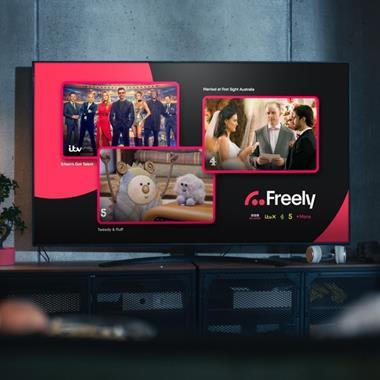
- The award-winning Manhattan Aero streaming puck, featuring TiVo OS and Freely certification, achieved immediate sell-out retail success in early-2026, validating TiVo’s strategy for streaming TV delivery.
- TiVo is actively leveraging this momentum as a proof point to pitch a white-label, multiplay proposition to alternative fibre networks and internet service providers facing intensifying competition from integrated incumbents.
- Industry mindsets are said to have fundamentally shifted, with altnets increasingly viewing bundled TV as valuable for customer retention rather than a challenge.
- Research and early deployments indicate that adding a robust TV proposition can help altnets reduce subscriber churn, amidst investor demands for take-up and ARPU growth beyond pure connectivity.
- The backdrop is the UK’s drive towards streamed television delivery backed by public broadcasters, with Freely positioned to become the nation’s leading TV platform by 2030.
Aero, a compact streaming puck ‘powered by TiVo’ from Manhattan, sold out within days of its UK retail debut in early 2026.
As the partners’ first standalone device to carry certification for the UK’s new national TV platform, Freely, the Aero also recently swooped in to take the title of Best Streaming Device (UK) at the recent high‑profile T3 Awards 2026. This saw it best other finalists with devices from streamers Amazon, Apple and Sky, and hardware specialists Humax, Netgem and Thomson.
For internet TV pioneer TiVo, this is more than just its latest consumer electronics success story: it is validation for a white-label multiplay proposition it believes can change the value proposition for altnets and ISPs.
TiVo OS + Freely: next-generation UK streamed video
The immediate selling point for fibre internet providers is Freely integration.
Backed by the BBC, Channel 4, Channel 5, and ITV through joint venture Everyone TV, Freely is the UK’s streamed successor to Freeview and Freesat — a ‘next era’ national free-to-air platform currently carrying over 60 live television channels (with further additions underway). TiVo was in 2024 among the first to achieve Freely hardware certification, initially integrated into televisions (and now also set top boxes).
Freely is predicted to be in 10.5 million UK households (over a third) by 2034, according to Everyone TV’s research, as audiences increasingly switch to viewing online and replace or upgrade older solutions. The timing aligns with industry and government moves to transition free-to-air television from digital terrestrial to internet-based delivery, as well as potentially expiry of current broadcasting licences in the same timeframe.

TiVo OS expands consumer choice, gives retailers and ISPs new ways to delight customers with a frictionless live TV experience, and extends the reach of UK broadcasters via IP
TiVo has deep roots in UK video going back over 25 years, initially with its eponymous standalone consumer digital video recorder and later powering television services for Virgin Media. Over the past five years, the strategy has shifted to software operating platforms (TiVo OS) and content understanding, helping consumers navigate the plethora of content and providers. This approach aligns with Freely, as the UK’s new-generation of free-to-air streaming platform also majors on metadata for a unified content and search experience, as well as integrating catch-up content. TiVo Corporation merged with California-based entertainment tech provider Xperi in 2020.
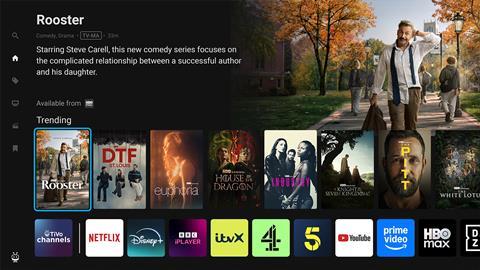
TiVo OS is now offered in 40+ countries and widely pre-installed on ‘powered by TiVo’ smart TVs by brands including Panasonic, Sharp, and Vestel. Global satellite player Viasat last month confirmed a strategic partnership to integrate TiVo OS as its connected TV platform across its footprint, extending delivery of streaming services into markets where terrestrial broadband provision is limited. The satco positioned the tie-up as offering a unified solution to content providers as well as providing new premium advertising inventory, with further potential for extension into aviation and maritime markets.
Beyond Trustpilot: attitudes are shifting
Until recently, many emerging fibre brands were wary of adding TV, with the prospect of a poor TV experience damaging hard-won reputations a genuine concern as recently as 18 months ago.
Mindsets have shifted, however, as streaming propositions have advanced and customer retention has become a higher priority in a market where overbuild and wholesale fibre are bringing major multiplay rivals into the competitive equation.
Speaking to TelcoTitans, Patrick Byrden, Vice-President for Business Development at TiVo, observed that “the priorities of altnets have shifted from pure rollout to conversion and retention, and the associated product bundles, such as TV.”
He cited one altnet that had, within the past year and a half, moved from outright resistance — fearing that any TV offering could harm its Trustpilot score — to actively exploring bundled mobile and TV services. The shift reflected a wider change in how altnets are calculating risk, with fear of losing customers to better-positioned rivals now outweighing the concern of service complexity.
For Charles Dawes, Senior Director for International Marketing at TiVo, the selling point to those operators is the option to “let the brand lead”.

It’s always ‘powered by TiVo’ — we’re not trying to sell you a ‘TiVo box’ or a ‘TiVo TV’. We let the service provider’s brand lead, and it’s ‘their product powered by TiVo’, which I think is crucially important compared to some of our competitors who try to take over everything
With commercial traction building, several UK altnets have progressed discussions to the point where launch dates are being considered, with Dawes highlighting how TiVo’s position has been strengthened by the Aero puck’s early success. “We’ve got a proof-point, and they can see the capabilities there”, he says, “the conversations are shifting”.
Why TV, why now?
Byrden pushed back firmly on the misperception that TV is in terminal decline.
TiVo’s research shows UK consumers averaging four hours of daily viewership across all screens, with around a third accounted for by broadcast TV programming, and he considers the majority of household viewing to already be streamed.

There’s constant talk about this ‘cord-cutting’ and moving away from pay-TV, but the reality is that people actually stay on the service if you give them a great service
Byrden also pointed to hard retention evidence from existing deployments. He cited a major UK service provider that saw churn fall from approximately 9% to below 1% among users after adding a TiVo-enabled voice interface.
“The majority of network usage is going to be on video”, he said. “If you can have a great user experience or a great TV product and you have ‘your brand’ on it… then people will go there”.
For TiVo, the momentum behind TiVo OS in the UK has been significant. The platform ranked among the top four smart TV operating systems by sales in Q4 2025, including multiple weeks in the top two. Pucks like Aero are now broadening the Freely-aligned ecosystem beyond consumers actively shopping for a new TV.
Bringing telly to a fibre fight
TiVo’s Freely pitch aligns directly with pressures bearing down on UK altnets, including:
- Competition from integrated majors BT/EE and Virgin Media O2 with their converged fibre-mobile-video national offers.
- The double-edged sword of One Touch Switch, which eases customer migration in both directions, fuelling discounting.
- Intensifying investor demand for take-up and ARPU growth, beyond pure connectivity.
For altnets assessing the TiVo OS platform in this context, the already rich content proposition continues to develop, such as the often key sport and premium content dimensions where Premier Sports and HBO Max/TNT Sports are amongst recent additions. These join longstanding top-tier SVOD integrations with the likes of Amazon, Disney, and Netflix, with further notable additions anticipated.
With commercial altnet launches expected this year, TiVo’s track record with smaller operator ecosystems gives it confidence that the UK opportunity is both significant and scalable. This backdrop includes an established role powering TV services for independent ISPs in the US through collective licensing frameworks.
Supply, costs, and the Linux advantage
Initial Aero puck volumes in early 2026 were deliberately conservative, reflecting typical new-category launch risk, before settling into a consistent supply cadence. The launch coincided with wider macroeconomic disruption, which heightened the importance of key technical decisions, noted Byrden. Building TiVo OS on open-source Linux and designing it as a cloud-oriented platform reduced device memory requirements and has given TiVo valuable flexibility over hardware specifications and bill of materials in a market that has seen dramatic increases in memory pricing. The technical architecture also supports over-the-air firmware updates, enabling continuous product improvement without disruption for operators.
Topics
- British Broadcasting Corporation (BBC)
- BT Consumer
- Business/commercial model
- Charles Dawes
- Cloud
- Consumer (B2C)
- Consumer vertical
- Content & TV
- Devices
- Everyone TV (Freely, Freeview, Freesat)
- Fibre (FTTC/FTTP)
- Fibre Challengers
- Fixed broadband (FTTx)
- Gabriel Cosgrave
- INCA Conference
- Infrastructure
- ITV
- Netflix
- One Touch Switch (TOTSCo)
- Open-source
- OTT (over-the-top)
- Partnerships & Alliances
- Patrick Byrden
- Products & Services
- Sky UK
- Strategy & Change
- Thought Leadership
- United Kingdom (UK)
- Video
- Virgin Media O2 (VM O2)
- Xperi (TiVo)