























- Boost moved 7.7 million subscriber accounts onto a new billing and operational platform in under four months, while new activations continued.
- Boost and technology partner Wavelo did not set out to build an AI platform, but the modular and event-driven design has proved a timely foundation for controlled AI access to core systems.
- The operator’s IT lead Rob Bennett, arguing for experimentation at pace, explains why the operator has not “vibe-coded” its trusted billing partner out of the stack.
Moving nearly eight million mobile subscriber accounts away from a legacy billing and operational environment should have been a conspicuous, bet-the-business exercise, but Boost Mobile’s programme is striking for the opposite reason: subscribers were not supposed to notice it at all.
The migration was completed in controlled waves over around four months, while live activations and systems upgrades continued, with the old and new environments running side by side.
For Boost, this largely invisible changeover did more than replace inherited systems.
It left the US operator with a more modular, automated and observable stack, and one that, while not designed for today’s agentic AI, has turned out to be unusually well suited for it.
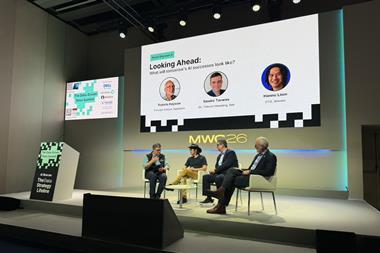
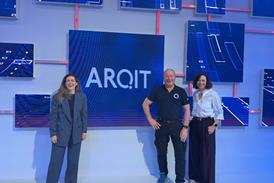
The combination of architectural judgement, good fortune, and a six-year working relationship shaped a candid fireside discussion at DTW Ignite 2026 between Boost’s IT lead, Rob Bennett and Justin Reilly, CEO of technology partner Wavelo. The conversation, captured in the video below, complements a case study detailing the migration and its operational impact.
Reilly plays down any suggestion that the partners anticipated the rise of agentic AI when they adopted the new architecture, but the choices made have given Boost a flexible foundation for connecting AI applications to operational systems under secure, controlled conditions.

“I don’t know that we were necessarily prescient”, he says, “but we knew a couple of these concepts were really important… event-driven, composable, modular [architecture].”
Case study
How Boost and Wavelo moved 7.7 million subscriber accounts while legacy and new platforms ran in parallel.
A stack built under pressure
The partnership began in 2020, when satellite broadcaster DISH acquired Boost’s prepaid business as part of the remedy attached to the T-Mobile-Sprint merger.
Boost then had to replace much of the software stack that had supported the brand under its previous ownership, while standing up the systems needed to run the retail business. The work also pre-dated its partner’s current configuration, with Boost having initially contracted with now-parent company Tucows, which launched Wavelo as a dedicated telecom software business in 2022.
“We were able to co-evolve the bulk of the OSS, BSS and retail stack together”, says Bennett. The fit was a good one from both a technological and cultural perspective. “We have similar thoughts on how to develop software and how to do what we call ‘telco the right way’”, he explains. “We came in with a lot of optimism about what we could do and how we could do better than what had come before”.
Shared principles included event-driven architecture (EDA), in which customer actions such as service activation or payment generate events that connected systems can process independently and in near real time. The partners agreed clear rules for how each software component communicates with the others, allowing them to change individual parts of the stack without having to modify and release every connected system at the same time.
The point was not novelty for its own sake, Bennett stresses, but a system that could keep changing without becoming unmanageable.

“We were able to co-evolve the bulk of the OSS, BSS and retail stack together.”

Boost’s history is easier to understand if ownership, network and IT transitions are separated rather than counted as repeated versions of the same migration. In the years since acquisition by DISH, Boost’s customers have moved across Sprint, T-Mobile wholesale, DISH/Boost’s own 5G network, and, most recently, an AT&T-led wholesale arrangement. Ultimate parent EchoStar today terms Boost as a “hybrid MNO”, retaining a 5G core with primary radio access coming from AT&T and customers also retaining access to T-Mobile. Within EchoStar’s wireless portfolio, Boost ranks amongst the biggest alternative operators in the US and the world’s largest MVNOs.
| MVNO (owner) | Subscribers (million) | Market(s) | Host (MNO) |
|---|---|---|---|
| BAIT (Walmart) | 27 | Mexico | Altán Redes |
| Lyca Mobile | 16 | 23 countries | Various (BT/EE in UK) |
| Snail Mobile | 14 | China | China Unicom (also China Telecom) |
| 1&1 | 12 | Germany | Vodafone (plus own network) |
| Spectrum Mobile (Charter) | 10–13 | US | Primarily Verizon (also T-Mobile) |
| Xfinity Mobile (Comcast) | 10 | US (Comcast also has Sky-branded MVNOs in Italy, UK, with 3m+ subscribers) | Verizon (plus Wi-Fi offload) |
| ALDI TALK | 8–10 | Germany (plus further MVNOs in Australia and other Europe markets with 2m+ subscribers) | Telefónica |
| Freenet | 8 | Germany | Deutsche Telekom, Vodafone, Telefónica/O2 |
| DIGI | 7–10 | Spain | Telefónica (plus own network) |
| Boost Mobile (EchoStar) | 7 | US | AT&T (also T-Mobile) |
| Tesco Mobile (Tesco/Virgin Media O2) | 6 | UK | Virgin Media O2 |
| Beyond ONE (Friendi Mobile and Virgin Mobile brands) | 5–6 | Middle East and South America multiple markets | Various |
| PosteMobile | 5+ | Italy | TIM (since 2026) |
| Lebara | 5 | Europe multiple markets | Various |
| Note: Excludes MNO flanker brands, such as Cricket (AT&T), giffgaff (Virgin Media O2), Metro (T-Mobile), Value/TracFone (Verizon), also hybrids such as TextNow in US (freemium MVNO + VoIP/Wi-Fi offload). Source: Companies; TelcoTitans; market estimates. |
|||
Migration without the cliff edge
For Boost Mobile, the key success indicator of its migration from legacy IT systems to an EDA-based platform was that customers appeared not to notice.
According to Wavelo’s case study, 7.7 million accounts moved in increments of up to 200,000 a day, with zero downtime and no pause in new activations. Automatic retries and visibility into each event helped the teams resolve failures without relying on a single high-risk cutover.
The platform was also changing while the migration proceeded, with Boost introducing tier discounts, multi-subscription billing, and more recently a payment-extension feature.
It then used a configuration layer to bring prepaid and postpaid propositions together onto a unified billing environment. Churn consistently around 3%, new offers launched in hours rather than weeks, and monthly savings measured in millions of dollars are attributed to the wider programme.
Number porting supplies another notable operational example, with Wavelo sharing that smart retries, machine-learning-led routing, and automated hold resolution helped streamline a port-in operation that needed 75 people to a team of 10–15, freeing staff for higher-value work.
Read the migration case study
AI readiness, almost by accident
The next test became controlled access for AI.
Bennett describes a “skilled agent layer” between conversational system front ends and the back-end functions that handle orders, payments, fulfilment, and inventory.
This layer is intended to prevent a persuasive customer-facing agent doing something operationally absurd, such as shipping a handset without taking payment, or activating service without recording it in inventory.
Control depends on more than an interface, with Bennett pointing to observability, auditability, replay, controlled retries, and idempotency (the ability to repeat a request without duplicating its effect) as safeguards when an AI component can still be “a little bit unreliable”.
While EDA does not in itself remove complexity, it makes event governance, schema discipline, and end-to-end monitoring part of the operating model. This means that a failed or duplicated action can be traced and contained rather than disappearing into a chain of point-to-point integrations.
Why not vibe-code the vendor away?
Wavelo’s CEO pressure-tested the partnership in real-time with a pointed question: as Boost experiments with AI-assisted software development, why has it not “vibe-coded” its BSS supplier away?
Bennett’s answer may be more insightful than a standard endorsement: Boost has already replaced peripheral software and removed spend, but experimentation becomes harder to justify around the trusted system holding the ledger for customer accounts.
“There are certainly things that we have vibe-coded away in our stack already”, he says. At the centre, however, recurring billing carries years of accumulated domain knowledge and requires resilience and auditability.
A robust core gives Boost a safety net while its teams build and test around the edges, leaving Wavelo’s place in the stack earned rather than assumed.

Wavelo’s operating heritage draws on its parent Tucows’ platform experience with Ting -branded mobile and broadband services, subscription management, and wholesale enablement, as well as the internet pioneer’s practical operator and recurring-billing experience. Wavelo also participates in TM Forum’s collaborative work, including Catalyst projects, with its Customer Experience Management solution listed in the Forum’s ODA Component Directory as cloud-based and event-driven, supporting provisioning, billing, and orchestration.
The last best experience
In today’s app-driven digital market, Bennett sees AI as pushing the telecoms industry to a point where it has to commit to new ideas and shift away from traditional monolithic systems.

“We need to break things up”, he says, “and, to me, EDA is a natural complement to a modular composable system”.
Reilly reaches back to his time leading product at Verizon, when he warned that operators were competing with each customer’s “last, best experience”, not only with another carrier.
This pressure compounds when brands and services converge in conversational interfaces: operators need to test ideas at pace, getting them to market and responding to what customers want.
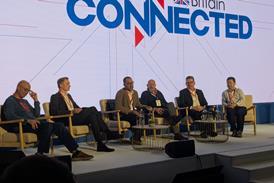
Also speaking with Bennett and Reilly on a TelcoTitans panel at DTW Ignite, Appledore Research analyst Robert Curran made the same point from an outside perspective: the benchmark is increasingly being set by banks and other digital businesses, not peer telcos.


Event processing is not new to telecom, and EDA is a well-established methodology in the IT world. Networks and operations systems have long handled alarms, usage records, messages, and real-time charging events. What is changing in telco is the application of EDA more widely across BSS, OSS and customer journeys, rather than inside isolated domains, with industry standards body TM Forum’s Open Digital Architecture (ODA) work increasingly linking composable components, Open APIs, and asynchronous event interfaces. The pattern is not confined to Boost, with UK digital operator giffgaff rebuilding ‘AI-first’ around EDA and microservices. EDA’s advance in telecom is “inevitable” for Wavelo’s CEO, “and we’ve believed that this was inevitable from the moment that we started the company” with the mission to make EDA telco-native.
Ask for everything — safely
The accelerated pace of development in software enabled by AI is opening opportunities for operators, but this also involves embracing a new mindset as well as new technology.
Bennett laid out a warning, or perhaps a challenge, to his peers: “You have to get started”.
“Run experiments, do them in a safe place where you can fail. But you may surprise yourself at what’s possible… Be action-oriented, ‘experiment first versus plan first’ is a great mode that’s been unlocked, and you wouldn’t want to miss out on velocity because you didn’t try.”
Bennett.
The other half of his advice is to make failure safe. Bennett recognises the “brittleness” that accompanies AI development, but does not treat this as a reason to stand still. Guardrails, accountability, and a dependable system of record are making experimentation tenable for him.
Reilly adds that roadmaps must track what software is likely to make possible in two weeks or two months, rather than only what works today.
For Bennett, fast-moving engineering tools have also removed some economic limits on the long tail of software improvements, fuelling his zeal for innovation. “Why not ask for everything?”, he says. “What I’ve learned is, ‘name what you want’. Worst case, you don’t get it, but I’ve been surprised at how often we can get great results”.
Bennett’s more revealing ambition is less theatrical: software that removes the small glitches and “micro frictions” that shape a customer’s view of the brand. The migration nobody noticed was an early expression of this idea, with the test now being whether Boost can preserve the same discipline when AI is allowed further into the business.
Topics
- AI/GenAI/ML (artificial intelligence, agentic, machine learning)
- Appledore Research
- Architecture
- Automation
- Billing (charging)
- BSS/OSS
- Customer/User experience (CX/UX)
- DTW Ignite (TM Forum)
- EchoStar (Boost/Dish)
- Europe
- Events
- Eventwatch
- Interview
- IT
- Justin Reilly
- MVNO (MVNE/MVNA)
- Network
- Open Digital Architecture (ODA)
- Operators
- Rob Bennett
- Robert Curran
- Tech & IT
- Thought Leadership
- TM Forum (TMF)
- Uber
- United States (USA)
- Verizon
- Video Content
- Wavelo