


















- Jason Raymer of iQmetrix warns that AI won’t tweak telco omnichannel commerce, it will ‘break the model’, and that operators must rethink their retail architecture accordingly.
- The telco commerce solutions provider also sees elevated customer experience usurping network performance as a service differentiator, with AI orchestrating enhanced person‑to‑person and multi-channel interaction.
- Service provider retail channels need to be ready, with solving omnichannel challenges demanding an architectural solution that creates a “system of intelligence, not just a system of record”.
- Raymer also identifies an opportunity for TM Forum’s ODA to give physical retail a more explicit place within telecom architecture standards.
- Watch Raymer’s full TelcoTitans interview and his DTW Ignite stage session below.
Telcos are already focused on the potential for AI to create breakthroughs on internal systems automation and efficiency.
Yet for Jason Raymer, Senior Vice‑President at Intelligent Commerce solutions provider iQmetrix, operators actually need to pay more attention to how their customers are using the technology to engage with services.
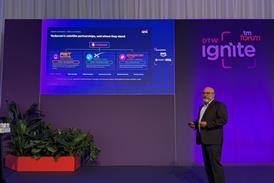
During presentations at DTW Ignite 2026, and in conversation with TelcoTitans’ Matt Leary, he explains how this shift demonstrates the need for a rethink of current omnichannel strategy.
Citing US research from fintech platform provider Adyen, Raymer points to half of all consumers already being prepared to let AI handle their entire shopping process, including final purchase, once their preferences are set.
“We have to start planning how we’re going to serve those [AI] channels because your next customer may not be human.”
Raymer.
He notes that there is already potential upside for operators that can engage effectively with this trend, referencing Adobe Analytics’ recent identification of a 16% higher conversion rate when consumers arrive via generative AI sources.
However, reaping these benefits will not be possible through piecemeal interventions in individual retail channels, particularly as human interactions will likely remain fundamental to the process, whether through contact centres or physical stores.
“AI is not going to ‘incrementally change’ the consumer experience when it comes to commerce and the transaction: it’s going to ‘break the model’…”
Raymer.
Further iQmetrix AI-commerce datapoints:
- 51% of consumers are prepared to let AI take over some or all of the commerce experience.
- 16% higher conversion rate among consumers already using AI to search for offers.
Fixing the retail channel is an architectural challenge
In terms of sustainable customer loyalty, Raymer considers the challenge now facing service providers is “really is an architecture problem”.
Today’s network architecture, he reflects, is “very much made up of point solutions [that operators have] spent millions of dollars on to be able to integrate together”. He sees “no real‑time context” for data in this environment, meaning that the insight operators are gathering across their channels is not being put to use.
Simply adding an AI layer on top of existing architecture just means “the outcomes are going to be the same”, he says. iQmetrix instead promotes adoption of a new architecture that orchestrates across channels, shifting away from “a system of record” towards “a system of intelligence”.
Through being able to draw different layers together with its own Intelligent Commerce OS, the Canadian firm works to close the gap most evident when service providers focus primarily on digital channels. The cost of not closing the “orchestration gap” between physical and digital is material, warns Raymer.
“I think the greatest misstep that’s taking place right now is many CSPs are solving the challenge in digital‑only format… that’s going to miss 20% of your transactions after it’s all said and done.”
Raymer.
From operator to advisor: Raymer joined iQmetrix having worked on the operator side himself before switching to the vendor world. This included using iQmetrix’s products to solve some of the same orchestration problems he now advises on: “I’ve sat in your shoes; I understand what’s happening”.
A missing standard for physical retail
Raymer’s ambitions extend beyond iQmetrix’s own product roadmap and into industry standards.
He points to TM Forum’s Open Digital Architecture (ODA) as having built out extensive frameworks for network orchestration and digital customer journeys, but nothing yet codifying how physical retail should be incorporated.
This matters, he argues, because physical retail interactions are where he considers operator brands to be most tangibly expressed, and where a significant proportion of transactions are lost to poor orchestration. Leaving this outside of formal architecture standards risks perpetuating point-solution sprawl that iQmetrix identifies as already burdening CSPs.
“ If anything, we want to be able to champion that on behalf of TM Forum and continue to take the next steps, so we start to be able to bring that focus and don’t lose out on that 20% of transactions that we’re not accounting for today. ”
Raymer.
Raymer frames this broader ODA commitment as one of the more encouraging signals from DTW Ignite itself. “There’s a willingness for CSPs and for suppliers to show up and solve real problems”, he says of TM Forum’s approach, and positioning iQmetrix’s push as complementary to the wider architecture agenda.
Digitally empowering the human touch
Raymer also asserts that service providers can no longer differentiate on network performance when infrastructure and technological capabilities coalesce.
Instead, he believes a theme that has been part of the iQmetrix philosophy throughout its existence is what makes operators stand out: placing retail at the heart of service provider identity.
“Your brand comes to life whenever you interact with the person. And that’s in physical retail. That’s in call centre. It’s whenever person‑to‑person takes place.”
Raymer.
Ensuring that customer transactions are seamless even when, for example, they start on a digital plane but complete in a physical one (such as when ordering a new phone through an app and collecting in‑store) requires orchestration across channels that can be challenging.
However, when a service provider knows not only who a customer is, but also why they are in contact, it can set the tone of the relationship going forward. “Brand resonance and loyalty just increases from those types of consumer journeys”, says Raymer.

“ If we just solve AI commerce in digital, we’ll all be at parity… the differentiator will come when we have context and understanding across all channels and a level of orchestration that allows us to win both in physical and digital, regardless of where consumers choose to go. ”
Whether the industry develops a common framework for physical retail remains uncertain, but Raymer’s underlying point is harder to dismiss. As AI takes a larger role in customer discovery and purchasing, operators’ ability to maintain coherent customer relationships will depend on whether their commerce systems can carry context across every channel.
Founded in Canada 27 years ago, iQmetrix is the global provider of Intelligent Commerce Operating Systems for telecom. Its platform replaces fragmented legacy stacks with a modern, modular layer that orchestrates telcos, retailers, OEMs, and partners across digital and physical channels. iQmetrix’s solutions power more than $17bn (€15bn/£13bn) in sales, 53 million invoices, and 23 million activations each year, and are used by more than 370,000 telecom retail professionals across more than 10,000 locations. The platform spans point of sale, activations, inventory management, and omnichannel commerce. As the only telecom-focused Intelligent Commerce Operating System provider, iQmetrix has a long-standing leadership position in North American telecom commerce and is expanding its international footprint through growing engagement with European operators and involvement in TM Forum’s Open Digital Architecture.
Editor’s note: this article and video were produced in partnership with iQmetrix.
Topics
- Adobe
- AI/GenAI/ML (artificial intelligence, agentic, machine learning)
- Architecture
- Business/commercial model
- Canada
- Contact centre
- Customer/User experience (CX/UX)
- Digital transformation
- DTW Ignite (TM Forum)
- Events
- Eventwatch
- Interview
- Jason Raymer
- Matt Leary
- Open Digital Architecture (ODA)
- Operators
- Products & Services
- Retail vertical
- Strategy & Change
- Tech & IT
- Technology
- Thought Leadership
- United States (USA)
- Vendor Voice
- Video Content