




















- Modern telecom networks are becoming exponentially more complex as operators embrace cloud-native operations and AI-driven automation, prompting a redefinition of network assurance.
- Ciena’s Blue Planet sees achievement of higher network autonomy levels hinging less on technology, and more on organisational change, data practices, and true convergence between fulfilment and assurance.
- North American operators are leading in assurance transformation, integrating vast data sources to enable predictive maintenance and optimise network performance.
- European groups like Orange, Swisscom, and TDC NET are following suit, embedding AI-powered observability and automation to balance customer expectations with operational capability.
Traditionally, the role of network assurance has been relatively clear for operators: monitor performance, address faults efficiently, and restore service quickly.
Telcos’ clients had similarly clear and demanding expectations of networks: they must work everywhere, all the time.
The operator perspective remains true, but expectations being placed on assurance capabilities are multiplying, and there is a growing consensus that finding the right response to this surge is too important to leave to a ‘make do and mend’ approach.
Adoption of cloud-based network operations has made technology environments vastly more complicated, with intricate webs of relationships across domains and services that are states of perpetual change. The level of operational data has exploded along with the need to rapidly and reliably utilise it.
AI and machine learning are also becoming critical to making modern networks capable, automatable, and scalable.
Knowledge and capabilities necessary for network operations teams to manage this upheaval are transforming, too, with traditional approaches and rulesets losing effectiveness.
The answer to these challenges and complexity is also in the data — if operators can find it.

This is where a rapid shift to modernised operations support systems (OSS) can cut through the increased network complexity, according to Ciena Blue Planet’s VP of Global Products & Delivery, Kailem Anderson.
He notes that two key elements of the OSS environment — fulfilment and assurance — have to date been typically siloed, which has exacerbated complexity. Bringing these two systems and their data together can deliver significant business benefits in terms of efficiency, faster new service monetisation, and better customer experience.
If systems are transitioned towards being data-led (rather than process-led), proactive problem-solving and anticipation can ensure that meeting customer expectations is achievable.
Elevating the mindset, alongside levels of autonomy
As highlighted in Anderson’s keynote at FutureNet, and in recent research from STL Partners, operators are pursuing increasingly higher states of network autonomy, in line with TM Forum’s six-Level pathway.
A current goal for a growing number of telcos is of Level 4 automation, which would see a shift from human-defined processes to true autonomous decision-making. However, Anderson warns that these automation ambitions may be at risk.
This is not a technology limitation — “that’s the easy part”, he says — but because of the need to also embrace organisational change and rewire mindsets and processes that have been in place for decades, particularly regarding data.
“It’s about changing foundational elements in your network, your everyday processes, and culture… and the one thing that I think is absolutely critically important in this transformation that we don’t talk about enough is ‘data’.”
Anderson.
This requires more dynamic systems, a better view of data, and clearer understanding of the links between network and service performance.
As noted by a senior industry contributor to the STL research, failing to adapt is “like powering the Rolls-Royce of networks with a tractor engine”.
STL’s view on assurance for customer-centric operators
Research from industry analysts STL Partners indicates that not only do 90% of operators see the drive for AI and automation as major triggers for an overhaul of OSS, but also that modernising assurance is specifically a key enabler for delivering the customer-centric products and services that are motivating transformation. The analyst’s three key recommendations for enabling a more customer-centric operator environment encompass:
- Developing cross-domain data practices across inventory, assurance, network and commercial data — to provide visibility and context, uncover links, and deliver operator-wide insights.
- Implementing intent-driven AI and automation use cases to underpin the service observability and control essential for the delivery of, for example, closed-loop automation.
- Prioritising collaboration with key ecosystem partners and fostering co-innovation to mitigate migration complexity and remove friction in the shift from legacy to modern networks.
North America moving fast, seeing gains with assurance transformation…
Blue Planet is seeing the pace and momentum of assurance migration stepping up, with North America at the fore.
The network software provider is at the forefront of this trend with its Unified Assurance and Analytics (UAA) offering. This integrates with its cloud-native platform and is designed to place assurance at the core of automated AI-empowered operations setups. Provision of a ‘single pane of glass’ view gives clarity into service and network topology across multiple network layers and domains, with AI-enabled use cases.

Gabriele Di Piazza, VP of Products, Data Sciences and Alliances at Blue Planet, highlights a major cable operator that completed a massive migration from legacy solutions in a matter of months. This encompassed several hundred thousand network devices and services that generate billions of performance metrics per hour. The cableco now has end-to-end network and service assurance through Blue Planet’s UAA. It is also leveraging greater inventory understanding of its complex topology for better monitoring and root-cause analysis.
Another North American operator, utilising AI and ML capabilities from Blue Planet, is now able to predict port-level network anomalies that cause loss-of-service outages up to a week in advance. With 90% accuracy, this capability is enabling root causes to be addressed before problems materialise, avoiding costs linked to service level agreements and out-of-hours operations. This is enhancing planning and monetisation as well as network optimisation.
… European groups modernising at pace
Advances are being seen in Europe, too, where Blue Planet points to implementation of its Intelligent Automation portfolio as demonstrating the benefits of taking a proactive approach to addressing the need for assurance modernisation.
Multinational service provider Orange Business is deploying Intelligent Automation solutions, with Blue Planet providing support across service order management and orchestration, as well as enabling AI-powered service assurance across multiple network vendors and domains.
Di Piazza lauded the Orange Business approach to thinking of integrated assurance simultaneously with service creation and orchestration as it builds out next-generation automation.
As a leading player in both Switzerland and Italy, Swisscom is modernising its systems using Blue Planet UAA as the foundation of its new assurance platform for fault and performance management.
Following an earlier successful deployment of UAA within its data centre estate, the solution will now also cover access and transport for the Swiss group, ultimately extending to mobile backhaul and B2B services.
“Our legacy service assurance platform could no longer support the more flexible services we plan to deliver”, explained Thomas Zippo, Swisscom’s Product Manager for Observability Shared Services, adding that UAA provides a cloud-ready solution suited to managing dynamic services and closed-loop automation.
UAA has been adopted to enable Swisscom to bring together fault and performance management with analytics within a single platform, providing a single viewpoint for network and service operations teams. It is also enabling AI-driven automated root cause analysis that can link network performance and faults with outcomes for applications, services, and customers.
Blue Planet and Swisscom have additionally been working on advancing standardisation in network management to reflect modern big data architecture, featuring a focus on integrating the YANG data modelling language into the network management lifecycle (to replace legacy SNMP tools).
Denmark’s TDC NET has been transforming its OSS in partnership with Blue Planet for around a year now, and is seeing success in reducing inventory management system complexity and improved operational efficiency.
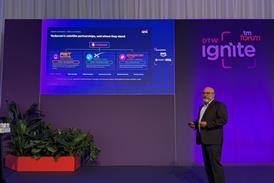
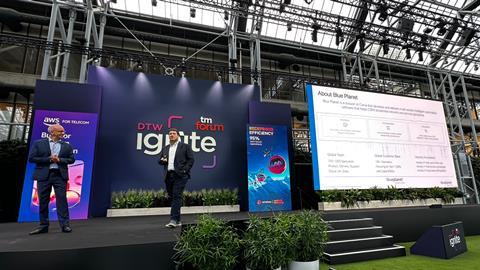
Speaking on stage at TM Forum’s DTW Ignite on the day the new architecture went live, the operator’s Head of Applications and Architecture Carsten Rasmussen described Blue Planet as “the foundation” of the Danish netco’s transformation, enabling a single source of truth for the network.
This means the operator can now truly understand what it can promise and deliver to customers, including awareness of the impact of outages, as it looks to overhaul and streamline its extensive legacy systems — taking systems to a level where customer expectations and telco capabilities are back in balance.
With signs emerging from operators across the continent that the shift towards a techco outlook and the associated transformation of legacy operations are beginning to bear fruit, the pace of change is only likely to accelerate from here. As benefits begin to be felt at the customer level, particularly in focus areas for growth such as B2B, the operator- and group-wide adoption of systems that can enable commercial realisation of the promise of automation will be increasingly urgent for operators.
Topics
- AI/GenAI/ML (artificial intelligence, agentic, machine learning)
- Appledore Research
- Automation
- Autonomous networks (zero-touch)
- Big data
- Blue Planet
- BSS/OSS
- Carsten Rasmussen
- Ciena
- Cloud
- Data
- Data science (analytics)
- Denmark
- Digital transformation
- DTW Ignite (TM Forum)
- Europe
- FutureNet
- Gabriele Di Piazza
- Italy
- Joe Cumello
- Kailem Anderson
- North America
- Orange
- Orange Business
- Revenue assurance
- Robert Curran
- Service assurance
- STL Partners
- Swisscom
- Switzerland
- TDC NET
- Thomas Zippo
- Thought Leadership
- TM Forum (TMF)
- Transformation (change)
- United States (USA)