








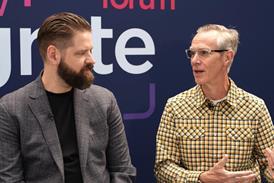

















- In conversation with TelcoTitans, European SI Celfocus’ data and analytics lead Sofia Esteves pinpoints need for an outlook change within CSPs aiming to harness internal resources and deploy AI, with data now a strategic asset demanding C-suite attention.
- Esteves has embedded data analytics and AI at the heart of her career, including helping shape Celfocus’ approach to supporting digital transformation for the telecom industry.
- The data and analytics lead drives adoption of Next-Gen Intelligence solutions to capture and sustain business value by releasing the full potential of data and AI.
- Practical use cases, from smart capex to AI-driven customer support, illuminate how Celfocus is partnering industry leaders to accelerate operational efficiency and customer impact.
- For AI to unlock true value at scale, telcos must adopt organisation-wide strategies to elevate data as a strategic asset and dismantle entrenched silos.
- With emergence of data-as-a-product also democratising access, effective data and AI governance are mandatory, with the role of Chief Data Officer increasingly critical.
For Sofia Esteves, whose career has consistently focused on application of data to address real-world business challenges, the concept that AI can be transformative for telcos is not new.

Through academia and her professional journey from consultant to executive director at telecoms systems integrator Celfocus, data analytics and AI have been the essence of her working life. This passion has never burned brighter than today, as we reckon with AI’s increasingly tangible rewards and risks, and as she seeks to help the communications industry engender era-defining change.
Since joining Celfocus from analytics pioneer SAS Institute, Esteves has led development of a services portfolio helping telecom and financial services clients extract and realise the business value of data and AI.
“I have always believed in the transformative power of data, amplified by AI, to change lives, reshape society, and redefine how businesses operate. This potential is what draws me so deeply to this field. We are living in exciting and truly disruptive times.”
Esteves.
This optimism is tempered by a pragmatism earned through experience, which fits well with Celfocus’ sector-leading understanding of data analytics, AI, and automation. The benefits of AI will not be delivered with the flick of a switch, with structures around systems and people needing to be reconsidered to overcome adoption challenges, and with management outlook needing to acknowledge a changing reality.
“CSPs face quite a challenge”, says Esteves in conversation with TelcoTitans. “In the technology landscape, there are still a lot of silos that create a real barrier to taking AI to the next level where it can make a difference to the bottom line”.
The telco environment is already complex, and digitalisation has sparked greater use of structured and unstructured data from multiple sources and huge data platforms, but often these are not designed to provide optimised access to data. “To unlock real value, CSPs need a strong, adaptable foundation based on a modern data architecture focused on governed and business-centric consumable data products that promote accuracy, agility and scalability” , she says.
Esteves believes that once the right structure and outlook are in place, the benefits can ramp up quickly and significantly, putting material gains from development of generative and agentic AI within reach.
This journey to scalable AI solutions starts with adopting company‑wide strategic thinking on data, she guides.
Elevating data as a strategic asset
Esteves considers that AI is a topic that needs to be considered at CEO-level, in terms of both technology and organisational change.
This is increasingly happening, and can be seen in the increasing number of initiatives that are being launched by operators with an expectation of generating fundamental business impact — with a focus on data not being siloed but instead being used across entire businesses, governed and curated to enable AI models to deliver actionable insights at scale.
“The perception is growing that data is really a strategic asset. Now, companies are more effectively looking at how they can leverage it to foster innovation and to achieve their key goals of greater operational efficiency and better customer experience.”
Esteves.
Looking forward, transformative use cases — particularly those leveraging agentic AI — will depend on real-time integration of curated data across domains (both internal and external) and seamless integration with business processes, Esteves envisages.
This highlights the strategic importance of having a robust and scalable foundation — an AI-ready intelligent platform based on data mesh principles that takes an enterprise view of data. This enables distributed access where data governance and quality are mandatory, both of which are facets critical for long‑term success.
Moving away from isolated modes of operation asks a lot of organisations, systems, and departments not accustomed to sharing data, meaning “you need a cultural change and shift”, says Esteves.
A key to success is to define a model that fits the organisation’s maturity at each stage. This needs to achieve the right balance between centralisation (where a data and AI officer defines principles, frameworks, tools, platforms and processes) and business autonomy, to foster collaboration and innovation in a secure setting that is compliant with the ethical use of AI and regulations.
The rewards of a strategic approach to data can be considerable, enabling “powerful use cases that cross information from different areas”. Esteves cites a ‘smart capex’ deployment that Celfocus introduced with an operator in Germany, where such benefits have already materialised.
With this solution, the client leverages data derived across its OSS/BSS to define and inform decision‑making on the best areas to focus investment, based on likely impact on customer satisfaction, churn, revenue, customer value and other metrics, as well as impact on infrastructure.
“Only by crossing this information is it possible to clearly define and plan where it makes sense for the company to prioritise investments in both infrastructure and customer service levels”, she says.
“Integrating AI agents into current processes alone won’t suffice. Organisations must rethink and redesign how they operate to harness the full potential of both human and AI capabilities.”
Esteves.
An example of the importance of delivering a cultural shift as the foundation of data-driven transformation can be seen from Celfocus’ work with Belgian operator Telenet on implementing digital twins. Here, engineering teams’ trust in, and adoption of, the technology were measured as key metrics in determining the project’s progress, within the Liberty Global OpCo’s path to greater network automation
Creating solutions for operators with Next‑Gen Intelligence
The challenges faced by operators when looking at data and AI applications can vary considerably.
Operators are under increasing pressure to capitalise on the AI-driven digital transformation wave but turning data and AI into value at scale is a lengthy journey.
While creating new opportunities, it also introduces significant challenges, including privacy, security, and regulatory compliance. These necessitate robust data and AI governance to foster trust, accuracy and transparency. Beyond these hurdles, creating and capturing value at scale requires deep business process transformation — reshaping how organisations operate and how they engage with customers, Esteves guides.
For some operators, this transformation spans multiple years; for others, progress is constrained by difficulties in securing investment or defining clear, outcome-driven business cases. Identifying a strong business case is a key component to delivering new solutions, placing the potential of data and AI firmly within a commercial and operational context, and ensuring it is not just technology for technology’s sake.
When working with operators, Esteves emphasises the importance of close collaboration to secure business objectives, including redesigning processes to fully leverage automation through effective human–AI integration.
This is encapsulated within Celfocus’ Next‑Gen Intelligence strategy, which aims to support operators in building the right foundations, overcoming challenges, and accelerating their transformation journeys. Through collaboration, the SI can draw on a strong track record in delivering complex, large-scale digital transformation programs, along with a broad repository of proven use cases and frameworks. These capabilities enable the implementation of next-generation intelligence solutions that allow AI and automation to deliver tangible business outcomes, she says.
“ Despite the underlying complexity, the approach must remain pragmatic. AI transformation should be iterative, guided by a clear strategic vision but executed through phased, use-case-driven delivery, generating early wins that build momentum, confidence, and measurable value. ”
Esteves.
Esteves highlights a customer experience use case that deploys AI to rapidly address customer queries on invoices. This is a common issue and one where risk of customer dissatisfaction runs high. When looking at why there is a disparity between bills, the solution provides natural language explanations based on AI analysis, supporting the contact centre agent in resolving any uncertainty and customer disquiet.
In a future iteration, she foresees self‑service options addressing queries faster, with AI agents performing “like an advisor for the customer” — suggesting new services or alternative tariffs based on insights it uncovers, and with tasks autonomously executed within the systems. Such an approach could enhance other customer service scenarios, too, with AI analysing the customer’s interactions with the business to better and faster understand and resolve the problem.
“By deploying these use cases, operators can not only lower costs and streamline operations, but also create richer, more personalised experiences that empower customers.”
Esteves.
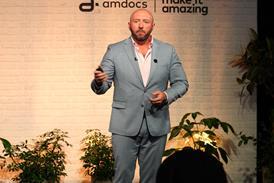
Celfocus presented alongside Vodafone at TM Forum’s DTW Ignite event in Copenhagen on development and deployment of the EMEA communication group’s AI-powered Field Technician Assist solution. This showcased the value of collaborative work in both identifying a clear network- and opex-oriented challenge, and developing an impactful and scalable use case to address it.
‘Thinking by design’ — looking beyond internal use case demands
Work undertaken by operators to transform internal operations through data and AI is also likely to open external opportunities to support customers, believes Esteves.
She notes use cases in the B2B sector, highlighting Celfocus’ implementation of a marketplace platform for a client in Portugal that enables businesses to subscribe to data products leveraging location‑based information. This is demonstrating the potential of data monetisation to create commercial impact for operators.
Also part of a bigger picture is the reality that with delivery of new use cases through large-scale data and AI deployments, operational costs, energy consumption, and sustainability also become pressing concerns.
This makes efficiency key, meaning that FinOps financial discipline must be at the heart of activity. Understanding regulatory requirements and impacts is another essential, which “should be considered by design when building modern intelligent data platforms”, according to Esteves, “it’s more than technical; it’s a mindset”.
This backdrop continues to engage Celfocus’ data and analytics lead in terms of finding innovative ways to accelerate clients’ AI-ready data transformation journeys. This sees Esteves leveraging the SI’s proven and cutting-edge AI-powered assets and frameworks to build scalable next-generation intelligence solutions. These then serve as catalysts for enterprise-wide business transformation, unlocking the full power of data, AI, and automation to drive measurable and sustainable commercial benefit.
The opportunity ahead is considerable, Esteves believes, reflecting with a hint of a smile that, “perhaps it was meant to be” that she would find herself working at a point of generational change for the telecoms industry when she first followed her instincts to pursue a career in data and analytics.
“Just a few years ago, many of the things we imagine today seemed impossible. We’ve broken numerous barriers, and we’re still learning. It’s still early days, but these are incredibly exciting times.”
Esteves.

Celfocus is a European systems integrator focused on delivering business value through data analytics, AI, and automation for industries including telecoms, financial services, and energy. Founded in 2000 as a joint venture with Vodafone, Celfocus is now fully owned by Euronext -listed Novabase.
Topics
- AI/GenAI/ML (artificial intelligence, agentic, machine learning)
- Automation
- BSS/OSS
- Capex (capital investment)
- Carla Penedo
- Celfocus (Novabase)
- Collaboration
- Data
- Data science (analytics)
- Digital transformation
- Digital twin
- Enterprise (B2B)
- Europe
- Germany
- Marketplace (exchange)
- Network & Infrastructure
- Portugal
- Sofia Esteves
- Strategy & Change
- Technology
- Thought Leadership