

























- If data and strategy are the foundations for autonomous networks, digital twins should be the cornerstone.
- Systems integrator Celfocus considers network digital twins to be fundamental to successful (and accelerated) autonomy.
- Moving from network and data siloes to a multi-domain digital twin enables predictive and prescriptive management and opens up new sightlines.
- This approach aligns with TM Forum’s Level 4+ autonomy goals, as being pursued by operators including Orange, Telefónica, and Vodafone.
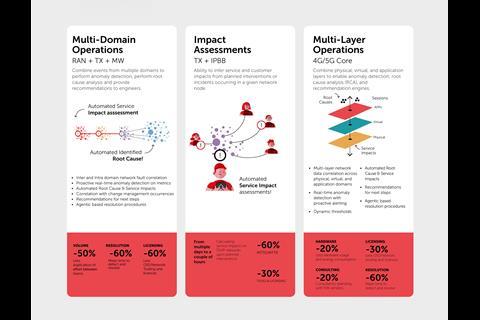
- A new Celfocus white paper highlights that digital twins can reduce the mean time to detect and resolve incidents by 60% through better root cause analysis.
Data silos are blinding network operators.
The first step on the journey to autonomous networks should be to lay out a clear strategic vision and establish strong data foundations.
The next, according to European telecoms systems integrator Celfocus, is to adopt a network digital twin framework that takes advantage of this data, and enables the vision.
Data and automation specialist Celfocus considers that CSPs moving towards autonomous networks should no longer treat network digital twins as a ‘nice to have’, but should build them into the core of a network autonomy ecosystem.
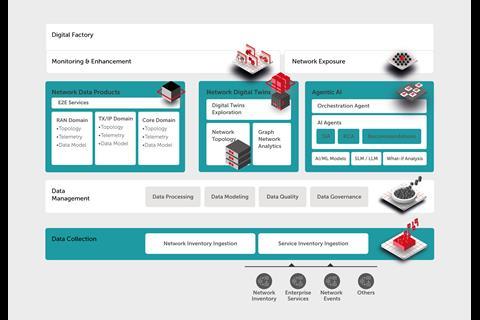
Adopting a network digital twin, the SI says, enables network operators to go beyond reactive management to a predictive and prescriptive setup.
From data siloes to multi-domain sightlines
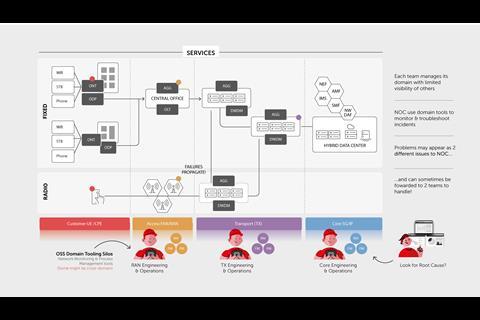
A traditional CSP operates with siloed network domains, which inevitably leads to blind spots.
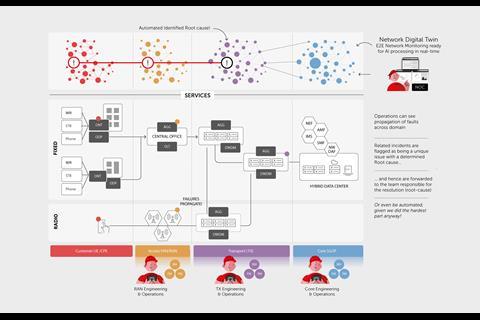
This means a single fault can manifest itself in any number of ways across the network, with no efficient way for an operations team to spot the interrelationship and identify the root cause.
A modern multi-domain, real-time network digital twin, by contrast, correlates related incidents and enables the network operations centre to identify a root issue, and set about a fix.
This places digital twins at the heart of a CSP’s journey to Level 4 + autonomous networks, as defined by the TM Forum. This is the transition from traditional or deterministic automation to autonomous behaviour, which is presently the goal of many if not most operators (see progress and ambitions at Orange, Telefónica, and Vodafone, among them).
Tangible benefits
In its Network Digital Twin: The Key Catalyst for Autonomy white paper, released ahead of Mobile World Congress, Celfocus identifies three tangible outcomes of network digital twin adoption:
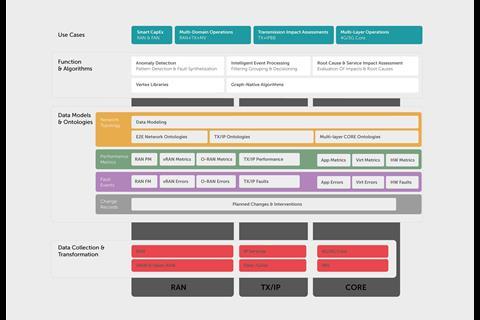
- Enablement of comprehensive root cause analysis across radio access, transport, and microwave domains, cutting effort duplication in half and reducing mean time to detect and resolve incidents by 60%.
- Provision of impact assessments of planned or unplanned changes in the network in hours rather than days.
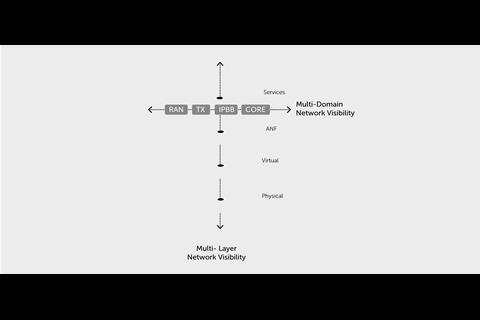
- Integration of physical, virtual, application, and session layers for full stack visibility, reducing unnecessary energy and capacity usage and the need for fragmented OSS tools.

Celfocus is a leading telecoms SI in Europe, with longstanding depth and strength in data, analytics, and automation, including AI, digital twins, and telco cloud. Notable recent engagements around network autonomy include Liberty Global’s Telenet and Vodafone Group’s regional network operations centre, as well as contribution to Project Sylva.
Topics
- AI/GenAI/ML (artificial intelligence, agentic, machine learning)
- Automation
- Autonomous networks (zero-touch)
- BSS/OSS
- Celfocus (Novabase)
- Customer/User experience (CX/UX)
- Data
- Digital twin
- Network & Infrastructure
- Network Operations Centre (NOC)
- Operations
- Service assurance
- Strategy & Change
- System integration (SI)
- Technology
- Telco Cloud
- Thought Leadership
- TM Forum (TMF)
- White Paper