


















- With its Global Neutral Host Index initiative, Nokia seeks to redefine perception of the market, seeing vast investment opportunity in a growing field.
- Analysis with partner Téral Research spotlights fibrecos, data centre colocation, and independent network builders alongside towercos in a sector predicted to be generating $200bn+ in annual revenue by 2030.
- Investment by neutral hosts is evolving, with increased elevation of active network assets that appeal to both the telecom industry and national authorities.
- AI is providing rocket fuel, acting as a neutral host growth multiplier for all aspects of essential “network plumbing”, not just data centres.
- Nokia’s alliance with NVIDIA underlines the opportunity surrounding AI and leading into 6G, with neutral hosts well-placed as demand on network resources evolves.
- Nokia and Téral Research are now readying the 2026 edition of the Index.
Nokia believes that the concept of neutral host operations has for too long been inadequately defined, and thus considered in too narrow a context.
While the industry is familiar with the terminology, it can still focus exclusively on the wireless domain. To Nokia, the label has far wider significance.
In launching the Global Neutral Host Index (GNHI) in 2025, Nokia and its research partner Téral Research have taken a considered approach to crafting a definition that fully encompasses the sector. TelcoTitans Infrawatch has taken the opportunity to study the research and discuss it with Téral Research and Nokia’s neutral host group.
In examining the broad concept of neutral host, Téral Research and Nokia found a common language used in four key segments, when assessing digital infrastructure operations and assets provisioned as shared infrastructure for the wider digital communications industry.
This shared foundation brings fibre companies, data centre co-locations business (data colo), and an emerging cohort of network builders into the mix with the mobile towercos that have dominated perceptions of neutral host.

There is significance in a clear definition. It not only helps identify key trends in the market and the direction of travel, but it also enables stakeholders to understand where revenue opportunities are likely to arise and where investment will be vital. It also belies any impression that the wider telecoms sector is moving forward steadily, but only slowly.
Development of the neutral host segment also coincides with and is being accelerated by another revolution crossing over with core telecom interests and opportunities — the inexorable rise of AI.
From Nokia’s perspective, an emerging mutual opportunity for growth is clear.
“ Some profoundly consequential trends have materialised since the start of this decade: skyrocketing demand for more connectivity; an exponential increase in data consumption; policymakers pushing to expand coverage to unserved and underserved areas; stricter environmental regulations; disaggregation of networks; and a never-seen-before appetite for investment in digital infrastructure. These dynamics are pushing the model of shared digital infrastructures and the rise of neutral hosts. At Nokia, we have been observing and assessing these developments and working with our customers to support the evolving sector of multi-tenant shared infrastructures. ”
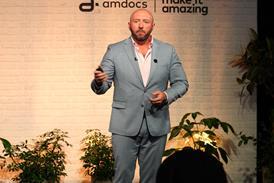
Michel Chbat, Head of Digital Infrastructure & Neutral Hosts, Nokia.
(Re)defining neutral host
Nokia and Téral Research are not pedantic regarding ‘neutral host’, and recognise that its definition may evolve. They have, however, identified a set of key elements that unite a range of infrastructure and service providers under the banner. Shared characteristics include:
- Companies that invest, build, or manage network infrastructure assets for long-term recurring multi-tenancy revenue.
- Involvement with bothpassive and activeinfrastructure.
- Backing from investors seekingcompanies they fund to haveoperational control.
$200bn revenue growth opportunity identified
In this inaugural release, the Global Neutral Host Index estimated that related services accounted for more than $164bn (€139bn/£122bn) of services revenue in 2024 — equating to around 9% of the global telecom sector’s $1.75tn total revenue.
This is seen growing strongly, with revenue generated by the neutral host market projected to reach $206bn by 2030, a $42bn (26%) increase from 2024.
As a baseline, Téral flags that almost three-quarters of total telecoms sector revenue in 2024 was reported by the world’s twenty largest CSPs.

Data centre colo income is the leading driver in absolute terms, with an anticipated 8% compound annual growth rate (CAGR) taking annual revenue from $54bn to $85bn over the period. The CAGR linked to fibre and tower asset revenue is expected to be more modest, at between 1%–2%, while the network builder segment is predicted to see the strongest growth to 2030, with an 18% CAGR, albeit from a modest base.
Stéphane Téral, who led the research, notes that the rate of growth for data centre colos means that revenue is set to double between 2023 and 2029, and he considers the neutral host model a natural fit for this segment.
“ You need somebody to take care of and manage these data centres, and host these data centres, and do all the work that others don’t want to do because they have something else to do, like training [AI] models. ”
Téral.
Network builders’ success is anticipated in areas “where it’s very complicated to build network in that specific area”, according to Téral. This includes areas with dense construction and high footfall. Factoring in the cost and complexity involved, the analyst considers that, “at the end of the day, it’s best to ask a specialist to do it”.
Whilst broadband-as-a-service is expected to remain “the largest low-hanging fruit”, the research also identifies smart city infrastructure, edge computing-as-a-service, RAN-as-a-service, and spectrum-as-a-service as notable emerging business models.
| Category | 2024 revenue | 2030 revenue projection | CAGR |
|---|---|---|---|
| Source: Nokia Global Neutral Host Index. | |||
|
Network builders |
~$1bn |
$3bn |
18% |
|
Data centre colos |
$54bn |
$85bn |
8% |
|
Towercos |
$57bn |
$64bn |
2% |
|
Fibrecos |
$52bn |
$54bn |
1% |
|
Total |
$164bn |
$206bn |
4% |
The four key neutral host categories
Towercos: central to traditional neutral host definitions, towercos run a business model founded on leasing access to sites for multiple service provider tenants. Expanding into buildings and outdoors spaces, towercos are also offering small cell and distributed antenna system solutions, while maintaining the long-term leasing that optimises capex and opex fundamentals. Over 95% of category revenue is considered to come from tenant leases. Multi-country players American Tower, Cellnex, and Crown Castle are notable examples, along with India’s Indus Towers. New and upgraded tower sites are increasingly technology-neutral by default, making them more accessible to mixed and active deployments.
Fibrecos: arguably the neutral host originals, these have roots in the late twentieth century fibre boom with dark fibre deployments and the evolution of business models around long-term leasing of capacity, transport equipment, and a diverse range of networks. In recent years, the emergence of FTTx access network operators has expanded the space, with growth also fuelled by added-value propositions (such as SD-WAN, cybersecurity, and edge cloud). Dark fibre business services, however, are still considered to contribute over 70% of segment revenue. Notable access fibrecos include CityFibre and Openreach in the UK, FiberCop and Open Fibre in Italy, FiBrasil in Brazil, and Australia’s National Broadband Network. Major AI-led data centre interconnect activity includes euNetworks in Europe, Lumen in North America, Zayo (present on both continents), while international connectivity players include Arelion, EXA, GlobalConnect, and RETN.

Data centre colos: similarly focused on recurring revenue, with hardware hosting, interconnection, and managed infrastructure services currently bringing in more than 90% of segment revenue. As AI “joins the internet”, in the words of Stéphane Téral, more infrastructure is needed for training and generative AI, with edge requirements for inferencing on the horizon. The worldwide market is becoming more crowded as hyperscalers and over 2,200 vendor-neutral, multi-tenant providers join major carriers that have traditionally bundled CSP offerings with their own or specialist colo providers’ services. Equinix, Digital Realty, NTT, and Vantage Data Centres are standout global examples, with numerous others, such as California’s neutral player OpenColo, also investing heavily in support of the AI boom.
Network builders: network builders are seen in the report’s definition as tackling projects that may be commercially unappealing to existing operators due to cost and complexity of the operating environment. They are focused on delivering connectivity for a defined area, generating recurring revenue from services carried over the infrastructure, which can include enabling venues and mobile network densification. In many instances, they will not have ownership of the assets they are building, such as infrastructure for public transport systems they are paid to build and maintain until it ultimately reverts to the contracting institution. Boldyn Networks is an international leader in this space, while Freshwave is evolving the model in the UK.

Remaining neutral but getting more active (aka ‘follow the capex’)
In 2024, $43bn was invested in neutral host capital expenditure, representing a growing 13% slice of an overall declining $321bn total spend by the telecom sector.
With much international fibre build now complete or scheduled, and 5G SA taking hold incrementally, there is no pending ‘next big thing’ capital intensive evolution evident on the telco radar, with the peak for the latest ‘next-generation’ network hardware investment cycle now passed.
While 6G is anticipated, and AI envisioned as a powerful driving force, the principal message received by Téral Research when gathering data for Nokia’s Global Neutral Host Index was that 5G would remain the focus for the foreseeable future. Even when 6G snaps into gear, it is imagined as a less capex-oriented, more software-driven development for operators.
Investment in neutral host capabilities bucks this overall downward trend, however, with ongoing investment seen enabling the sector to leverage value still untapped in fibre and 5G, contributing to an anticipated 2.7% CAGR over the next five years. This is predicted to see the proportion of total telecom sector capex accounted for by neutral host investment jump from 13% in 2024 to 17% in 2030.
The neutral host investment mix is also seen changing, with outlay on passive infrastructure sliding to around half of capex by 2030 as the sector moves on from emphasising the addition of further towers, fibre, street furniture, and real estate.
In contrast, investment in active equipment is expected to be the key driver of neutral host capex growth, ultimately contributing 37% of total outlay as it rises from $14bn in 2024 to $18bn in 2030, with a CAGR of 4.7%. Expenditure on software is seen growing even faster, to $5.7bn in 2030 (from $3.3bn in 2024, with a 9.5% CAGR).
Stéphane Téral highlights that some traditionally passive towercos are considering upping their investment in active assets to become more integrated service providers for CSPs. He suggests this offers the prospect of driving down operating costs through greater sharing of physical assets and related expenses across clients, while retaining the stable recurring cash flow benefit of being a long-term landlord with strong leases and renewals.
Increased levels of asset-sharing driven by active capex should also appeal on the public policy side, with neutral host models considered more efficient in both capital and ESG terms, as well as lowering barriers to market entry.
Spending on active assets includes broadband aggregation equipment, optical equipment, routers and switches, and wireless equipment around RAN, small cells, DAS and Wi-Fi.
AI as rocket fuel multiplier for neutral host
Analyst Téral identifies key trends in the AI sphere that are making the technology “a multiplier to the global neutral host market”.
It is well established that the surge in AI is driving up demand for data centres and interconnect, notably in North America but also cascading worldwide, aligning with neutral hosts in multiple aspects.
AI end-usage is suggested to be changing network traffic patterns, with disproportionate increase in upstream activity, with advanced adopters like South Korea seeing pressure on choke points such as metro networks and edge node capabilities.
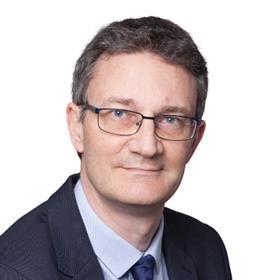
There is also expectation of AI compute being conducted at the network edge, through a shift from training to inference and increasing use of agents. “[These changes] will impact all types of access networks and core networks”, guides contributing analyst, Philippe Poggianti.
Players across all of Nokia’s neutral host categories appear well positioned to benefit from the extensive “network plumbing” that comes with AI-driven infrastructure build-out. Multi-billion dollar commitments to data centre colo and fibre are already making this very tangible, and the collective impact may accelerate wireless densification and network edge enhancement. In a more agentic future, facilitating smooth access and transit may also further lift traffic between billions of nodes and data centres.
“ All types of neutral host companies benefit from these generative AI trends. More fibre will be added to backbones, to metro, edge and access networks. More cell towers and small cells will be connected to fibre and, most importantly, some of the active intra-data centre and inter-data centre connectivity will be done by data centre or co-location companies themselves. ”
Poggianti.
The rise of AI over the rest of this decade has been framed by consultancy McKinsey as a fresh opportunity for the telecoms sector to capture growth from technology disruption that has in the past flowed elsewhere.
Network traffic forecasts highlight AI impact on underlying infra
Research from Nokia’s Bell Labs Consulting, forecasting growth in global network traffic over the coming ten years, vividly illustrates the anticipated impact of AI on networks as it changes not only the volume but also the nature of traffic. Total global fixed and mobile traffic flows are projected to grow 3–7× by 2034, at a CAGR of between 13% and 22%, across a range of conservative to aggressive demand scenarios. While consumer streaming of video will remain a core driver, and growing industrial use cases will lift enterprise connectivity, the impact from AI is expected to be considerable.
This AI surge is forecast to be both direct (through consumer and business interaction with AI tools and use cases) and indirect (as AI fosters greater user engagement and drives traffic from non-AI applications). The research notes that “AI traffic does not stay inside one data centre. It moves across edge, metro, core and cloud infrastructure”, traversing areas of growing neutral host strength and influence as it becomes the “dominant driver” of wide area network engineering.
Nokia and NVIDIA alliance underlines neutral host opportunity
In late-October 2025, Nokia and NVIDIA unveiled a strategic partnership to integrate the AI leader’s capabilities into Nokia AI-RAN portfolio, supporting advancement of AI-native 5G and, ultimately, 6G.
The partnership will also see the pair working to create strategic infrastructure to enable what is described as a “new high-growth frontier” for the telecoms sector, by enabling delivery of distributed edge AI inferencing at scale, which ties into related opportunities for neutral host providers.
Research from Omdia suggests that the RAN market will be worth $200bn by 2030, with AI-RAN a significant part of the growth opportunity.
IT major Dell Technologies is closely involved in the Nokia-NVIDIA development plans, and its founder Michael Dell highlighted that the telecoms industry “owns the most valuable real estate for AI — the edge, where data is created”. He further highlighted that sector infrastructure will need to support demands around latency and data sovereignty, potentially becoming “distributed AI grid factories”.
As Poggianti notes, while the precise nature of the AI infrastructure emerging across data centres and networks remains to be seen, it is clear that investment is happening and is essential. Neutral host players are well-placed to make a meaningful contribution and capture a significant share of this growth.
TelcoTitans will be covering the next edition of the Nokia Global Neutral Host Index, updating on sector progress and developments, and considering how the sector and opportunities are advancing and evolving.

Topics
- 5G
- 6G
- AI/GenAI/ML (artificial intelligence, agentic, machine learning)
- Capex (capital investment)
- Data centre
- Edge
- Fibre (FTTC/FTTP)
- FibreCos
- Infrastructure
- Michel Chbat
- Network & Infrastructure
- Neutral host
- Nokia
- NVIDIA
- Philippe Poggianti
- RAN (radio access network)
- Revenue (income)
- Stéphane Téral
- Thought Leadership
- TowerCo
- Towers