
















- Boldyn’s UK&I CEO champions a culture of collaboration rooted in “win‑win” outcomes for partners, customers, and investors alike.
- This leadership philosophy evolved from lessons learned during the London 2012 Olympics, where industry cooperation proved critical to seamless network success.
- At Boldyn Networks, the ethos now drives projects from Sunderland’s smart‑city innovation to TfL’s massive London Underground connectivity upgrade.
- The company’s neutral‑host model exemplifies how shared infrastructure can cut costs, deepen trust, and accelerate digital coverage.
- O’Reilly attributes agility and customer focus to a distinctive One Boldyn culture shaped by founding CEO Igor Leprince.
- Long‑term anchor investor CPP Investments underpins this philosophy by backing strategic patience for balanced, sustainable returns.
- For O’Reilly, success in telecoms remains ‘a marathon, not a sprint’ — built on trust, adaptability, and shared progress.
One of the most striking elements for anyone who has run a marathon is the sense of camaraderie and support that builds within the deep field.
Although working independently, the runners are pursuing the same goal and help each other through the inevitable tough times on a 26.2-mile course intended to test your limits in a race that you want to culminate with the finishers’ club.
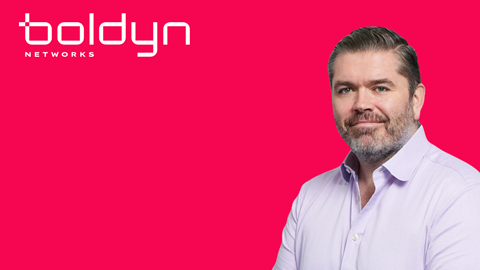
This may have been on the mind of Boldyn Networks’ UK & Ireland CEO Brendan O’Reilly as he spoke to TelcoTitans from New York, ahead of running the record-breaking 2025 edition of the Five Boroughs distance race.
The conversation explored O’Reilly’s strategic outlook, his business philosophy, and the route from battle-scarred mobile network engineer to enlightened executive leader at the network builder and neutral host service provider he joined as global CTO in 2021, and where he took the mantle of regional head in 2024.
A common theme is the critical importance of working collaboratively, whether within a business, an industry, or a community.
In building a career that has seen him work both within mobile network operator environments and as a partner, as well as engaging in cross‑industry projects, the emphasis he brings is the value of “winning together”.
He sees this mindset as a key driver to future success for Boldyn under his leadership, and it’s a philosophy that has its origins in one of the UK’s highest profile success stories this century, the London 2012 Summer Olympics.
Collaboration ‘only works if it works for everyone’
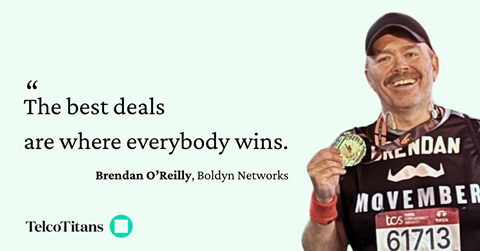
“ The best deals are where everybody wins, because with that motivation on all sides they’ve got the best chance of succeeding. ”
O’Reilly.
After beginning his career in telecoms as a RAN engineer at T‑Mobile UK (now part of BT/EE), O’Reilly added and progressively increased his responsibilities after joining O2 UK as an area radio manager looking at cell planning.
This drew him into preparations for ensuring network coverage was sufficient to meet the huge demands placed by the Olympics. He considers this a personally “defining project” that also put him on a path to appointment as O2 UK’s CTO in 2015.
O’Reilly was part of the BT-led Joint Olympic Operator Group, which brought the UK industry together. Here he saw that while all the country’s operators were working towards a common goal of delivering successful network coverage, each still had its own individual priorities. This led to appreciation that collaboration “would only work if it worked for everybody”.
“ Up until [the Olympics], I’d always looked at my role as being about ‘what was best for the company I was working for?’. With the Olympics, it was ‘what was best for the industry?’, ‘what was best for the reputation of the country?’. That was a different way of looking at telecoms for me. ”
O’Reilly.
Collective achievement was ultimately demonstrated in the fact that communications for the games “pretty much went under the radar” — with seamless, unnoticed delivery being the sign of true success.
This insight has stood O’Reilly in good stead at Boldyn, where the importance of cooperation is totemic, and a hallmark of many of the projects being delivered for multiple partners drawn from across the operator, public sector, and other enterprise environments. “Just thinking about things from a ‘UK Plc point of view’ has been really, really huge”, he says.
Boldyn: culture driving technological innovation
O’Reilly is effusive in his praise of the Boldyn workforce, crediting founding CEO Igor Leprince with creating a culture and team focused on customer engagement and outcomes.
“It’s one of the strongest cultures I’ve worked in”, he says. “You can walk into any office anywhere in the world and, as a Boldyn person, know you’re in a Boldyn office, and there’s a lot more to that than just the sign on the door”.
This culture is driven forward on multiple fronts, according to O’Reilly, from the underlying technology integration (which he orchestrated as CTO, and maintains a watching brief), to the focus on delivery in teams and the willingness of the company’s backers to support management’s long-term, win-win approach to developing the business.
Culture is emphasised at the individual level, too, with O’Reilly saying that “you’re not just asked to bring your whole self to work here, you are expected to”. After all, he notes, “you weren’t hired to be ‘someone else’”.
Walking the talk at Boldyn — no vanity projects
O’Reilly highlights that ongoing evolution within commercial relationships can, and indeed should, develop as projects progress.
He considers it important to be able to recognise where projects and partnerships can adapt to meet the needs of both the client and service provider — “again, it’s that ‘win-win’ piece; it has to work for both sides”.
Boldyn’s work with Sunderland City Council is identified as a shining example of how deep understanding of a client’s needs allied to partner adaptability is resulting in delivery of greater outcomes with clear end‑user benefits, and “not delivering technology for the sake of it”.
The initial partnership centred on installation of basic infrastructure and smart city solutions, to help address absence of private sector investment. The partnership has since evolved to include free public Wi‑Fi across the city, along with other fibre, IoT, millimetre-wave and private 5G to create a network of networks. This is being leveraged not just to meet core objectives but also generate value elsewhere. Today, the numerous and still increasing tangible benefits include digital transformation of social care, health, public safety, and digital inclusion services, including the Stadium of Light as a smart venue showcase, and wider economic uplift.
The collaboration has seen Sunderland repeatedly recognised at the World Smart City Awards and acknowledged for its community improvement work at the Connected Britain awards.
“ This is something that Boldyn is really good at in every territory: we’re always very clear that technology has to deliver on an outcome, or there’s no point to it. There should be no vanity projects, and I think over the past twelve to eighteen months [while as UK&I CEO] we’ve lived that approach and we’ve delivered for our customers, which is a really good place for us to be. ”
O’Reilly.
Equipping London with its new digital fabric
Boldyn’s relationship with Transport for London (TfL) is another example where recalibration becomes natural as the project’s challenges and potential become clearer.
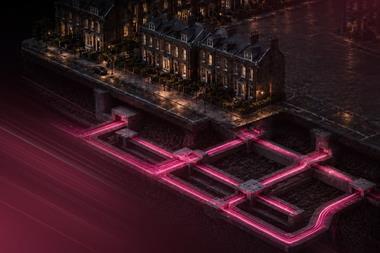
Holding a 20‑year concession to deliver seamless connectivity anchored in the depths of the London Underground, Boldyn is set to invest £1bn in creating what is envisioned as a “a new digital fabric for London”.
With its Victorian era origins and twenty-first century obligations to provide near round‑the‑clock transit, working on the Tube presents an enormously difficult working environment, but O’Reilly evidently relishes the challenge and application of his pragmatic business philosophy in demanding conditions.
The rollout is gathering pace, with almost half of the 385 stations now connected and a third of tunnels covered, as a completion date of December 2026 comes into view for the metro hubs. Collaborating with all the UK’s MNOs, the partnership is already greatly boosting 5G coverage in the capital, with Boldyn also deploying kit above ground to maximise the new network and maximise TfL street furniture assets.
“ It’s just a tough environment. Adapting to that and being able to work safely is paramount, and then maximising your efficiency on the back of being safe is huge. And TfL have been a really great partner. ”
O’Reilly.
Bringing neutral host economics to the MNO playbook
“ At Boldyn, the future is about ‘diversifying’. It’s about private networks and neutral host sharing that can achieve better quality of service at a fraction of the [go-it-alone] cost, which is where the industry needs to get to. ”
O’Reilly.
O’Reilly sees continued strategic evolution becoming increasingly pertinent as the 5G rollout reaches its later stages and small cells play a more integral part in ongoing development of mobile coverage.
In most instances, he believes that partnering with a neutral host player is the most effective way for MNOs to deliver capacity in densely‑packed, high‑demand areas (such as sports stadiums, office blocks, and retail centres) and he considers capabilities in this area a key differentiator for Boldyn. “We’ve got an amazing set of assets that nobody else has access to and we’re good at delivering them with strong processes that amount to a really useful asset for MNOs”, he says. Again, he sees this as a win for all sides.
“ When neutral host works, it works for everybody. If the MNOs don’t save money, why wouldn’t they deliver it themselves? You also have to be open to the fact that you’ve got to deliver to their standards, and gain their trust, so they keep coming back. That’s exactly how it was when I was on the other side — you work with partners who do what they say they’ll do. ”
O’Reilly.
Success brings its own momentum
As Boldyn’s portfolio expands and evolves, O’Reilly highlights that building momentum lends itself to expansion and growth. “The key is, if you can drive one outcome, then you can adapt from there to drive two or three more”, he explains, “and that’s not just for one customer, but for multiple different ones”.
“ People have been trying to build up a use case library around connectivity for private networks and the edge for a long time, and the best way of driving a use case library is to actually fix a problem. ”
O’Reilly.
This problem‑solving ethos is evident in projects such as Boldyn’s work with Sunderland, where the initial wireless networking deal has evolved to see creation of a powerful metropolitan data platform that O’Reilly believes can do much more, “not just for Sunderland, but for councils across the world”.
Momentum starts, he says, with having the right conversations with the right people. And with his affinity for listening and helping, long‑term technological evolution, commercial adaptability, and collaborative ‘win‑win’ deals, O’Reilly knows better than most that success is a marathon, not a sprint.
Backers with eyes on the long game
The need to ensure success for all counterparts runs to Boldyn’s own inner circle, including its people and other stakeholders. While customer‑centricity is at the core of this outlook, O’Reilly also highlights the importance on any project of also balancing needs of the company and ensuring a return. “If you can’t make those three things balance”, he suggests, “you need to look at the challenge you’re trying to solve again to find a way they will”.
Boldyn is itself multibillion global entity and its principal investor CPP Investments plays a notably supportive role in facilitating its balance, according to O’Reilly, thanks to the Canadian pension fund’s deep investment experience and recognition that the neutral host provider is working in a field that thrives on returns with a long horizon.
“ We’ve got amazing backers who look at things in a much longer term than some of our competitors and are willing to look at different constructs for deals because, again, it comes back to ‘everybody needs to win’. If CPP has to wait a bit longer to win, then they’re prepared to do that as long as it’s the right deal for everybody. ”
O’Reilly.
Role models and mentors are another common thread through O’Reilly’s personal and professional development, interrelated with rising to and learning from challenges and opportunities suddenly thrust upon him. With the Olympics, Cornerstone, the UK’s Shared Rural Network, and becoming a CTO notable amongst these, it is telling that he does not only namecheck influences from Telefónica O2 (such as Global CTIO Enrique Blanco, CEO Mark Evans, CTO Adrian Di Mio, and COO Derek McManus) but also from recurring MNO partners BT/EE (CSNO Greg McCall) and Vodafone (including technology and radio network leads, Andrea Donà, Kevin Salvadori, and Yago Tenorio), amongst others.
More recently, notable influences include Boldyn’s predecessor UK&I and Group CEOs, Billy D’Arcy and Igor Leprince. The latter made a huge impression, including originally ‘selling’ O’Reilly on the vision and challenge of joining a comparatively smaller business to ‘take neutral host to the world’ — despite not actually having been looking for a new role at the time.
Topics
- 5G
- Adrian Di Mio
- Andrea Donà
- Billy D’Arcy
- Boldyn (BAI)
- Brendan O’Reilly
- BT Group
- Connected Britain
- Connected/Smart (city, home, etc.)
- Derek McManus
- Digital transformation
- EE
- Enrique Blanco
- Greg McCall
- Igor Leprince
- Interview
- Kevin Salvadori
- Mark Evans
- Mobile Private Networks (MPN)
- Network & Infrastructure
- Neutral host
- Partnerships & Alliances
- People
- Private Networks
- Public Sector vertical
- Santiago Tenorio
- Strategy & Change
- Telefónica Group
- Telefónica UK (O2 UK)
- Thought Leadership
- Transformation (change)
- Transport for London (TfL)
- United Kingdom (UK)
- United States (USA)
- Virgin Media O2 (VM O2)
- Vodafone UK