
























- Operators are transitioning autonomous network strategies from theoretical efficiency to verifiable revenue generators.
- Vodafone, Elisa, and Telenor provide converging evidence that network automation is now driving revenue, not just about opex.
- Operators say TM Forum Levels have become a distraction — the real discipline is reverse-engineering from business outcomes.
- Elisa’s “digital master”, Vodafone’s configuration play, and Telenor’s personalised-service ambition mark the next frontier.
- Mavenir sees a wave of agentic AI — from operator pilots to OpenClaw — is reshaping the destination faster than the standards process.
For most of the past decade, autonomous networks have been an industry aspiration measured in slideware.
At FutureNet World this year, however, the conversation was being measured in business outcomes and emerging signs of a service layer that cannot be delivered without machine-driven operations.
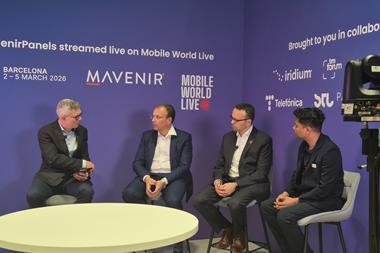
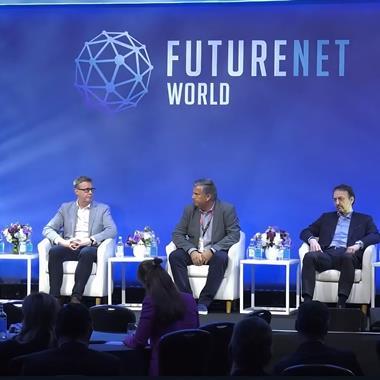
Three operators in markedly different stages of the journey laid out the evidence on the Adopting Autonomous Networks for Greater Agility and Scalability panel, with a network software vendor working across all of them filling in the platform picture.
Numbers that operators are now putting on record

Vodafone offered the clearest commercial proof points.
In Germany, where the operator is “around Level 3.5” on the TM Forum scale (and “one of the best across the Vodafone Group”), end-to-end fault management automation across fixed and mobile networks has halved customer trouble tickets and lifted NPS on the fixed network by 20 points over three years, according to Networks Operations Director Didier Clavero. More than 12,000 IP backbone elements have been upgraded with software deployed automatically end-to-end. Across the group’s entire Europe operations, critical incidents have fallen by more than 80% over the same period.
In Turkey, the local OpCo has treated automation as a cross-functional programme rather than a technology one. Revenue growth has run at more than 20% over three years even excluding the effects of local hyperinflation, with automation contributing to lower churn and improved customer satisfaction. Emphasising this non-technical perspective, Clavero made clear that “protecting our core business is extremely important and extremely relevant for us”.

Elisa brought a longer record, reflective in its being named Autonomous Network Operator of the Year at FutureNet World. The Finnish operator has driven incidents down by 83% over fifteen years, while data volumes have grown more than twenty-fold and operating and capital expenditure have stayed flat, according to Abir Hossain, VP for Technology Strategy and Operations.
Hossain reframes the benefit beyond raw efficiency, pointing to what he calls a clock-speed dividend. Configuration changes, software updates, and rollouts that once required dedicated teams and maintenance windows now run autonomously, with a digital model evaluating customer impact before any change touches the live network. “It’s all programmable, it’s all autonomous: it increases the clock speed considerably”, he said.
Telenor was more candid about distance to travel.
Jørgen Brecke, SVP for Technology Strategy and Partnership Ecosystem, described his group as “still in the beginning” of autonomous networks, while pointing to “concrete effects” in configuration, fault, incident, anomaly, and energy management, with early signs of ARPU uplift. Energy is the easiest opex win, he noted, as it does not require organisational restructuring or workforce change, only consumption reduction.
Why Levels became the wrong scoreboard…
All three operators converged on the same critique of how the industry is keeping score.
The TM Forum autonomy-level framework — zero to five, manual to fully autonomous — has become a useful shared reference, but it has too often been mistaken for the destination.
“ Our strategy in Vodafone is that it is not ‘Level 4 by Level 4’, ‘Level 5 by Level 5’. It is about the benefit that we can obtain with all the different automation projects.”
Clavero.

Brecke pushed the same point structurally. The journey to higher levels of autonomy demands architectural change, process redesign, and talent development, which need to be tracked formally alongside operational KPIs. “It’s not just about putting a technology capability into our networks; it’s about changing how we work and changing the house we are working in”, he said.
Mavenir’s SVP and General Manager EMEA, Virtyt Koshi, placed the vendor mirror image on the table. The right object of automation is the entire process chain (plan, design, deploy, operate, and maintain) rather than individual functions, he said. Mavenir’s own adoption of cloud-native and Kubernetes platforms has cut its core and messaging deployment times by more than 70%, which “has really helped our customers with time-to-market as well as cost reduction”.
From efficiency tool to revenue driver
The most consequential shift heard from the group was the visible move away from autonomous networks as an efficiency story towards a revenue one.
While Clavero’s Vodafone Turkey account is the clearest existing example, Brecke pushed the case forward.
“ To manage that space in a personalised way is not going to be possible if we don’t have autonomous networks where we can automate both deployment and configuration of all those services, and also make sure that we have automated service assurance to guarantee the delivery to the customers. ”
Brecke.

The propositions he has in mind, such as differentiated connectivity combining sovereign cloud and satellite that are delivered and quality-assured at the individual customer level, are considered not credible at scale under any manual operating model.
Koshi added the vendor dimension with network slicing, defining “5G SA’s promise to the market” as dynamic, intent-based services that scale with demand under quality guarantees. Mavenir has deployed these solutions in broadcast and media, consumer, and government and defence segments. “One can call it an autonomous way to meet the demand in the market”, he said.
What autonomy at scale really requires
The most instructive technical contribution of the panel came from Elisa’s own self-criticism.
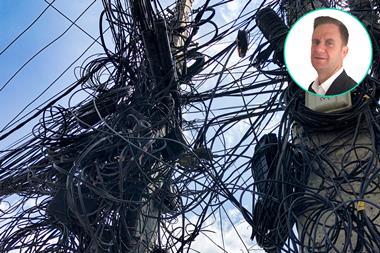
Hossain described how early automation, valuable in itself, accumulated into what he called a “spaghetti of automations”, with large numbers of point-to-point solutions each tied to an individual use case and working in isolation. By 2016–17, the operator had concluded that this approach would hit a ceiling.
The redesign rests on two ideas. First, a unified data platform consolidating information from across vendor silos, upon which intelligent agents can drive cross-domain use cases consistently and at scale. Second, a shift from digital twin to what Hossain calls a “digital master”. This is not a digital twin representation of the physical network, but the authoritative environment from which the physical network is driven, and where changes are deployed and validated first. “That sort of mind-shift change is what allowed us to deliver the results”, he said.
For vendors, the equivalent discipline is in the platform layer.
Mavenir’s cloud-native, GitOps-driven lifecycle management is what makes its deployment-time reduction possible, Koshi explained. It is also the platform on which the company is now building domain-specific AI agents for performance, configuration, and fault management. While still at “very initial stages”, these are intended to feed into larger operator-level agentic systems rather than replace them.
The technology environment around these decisions is shifting fast enough to put current concepts at risk.
Koshi singled out the rapid emergence of OpenClaw — an open-source autonomous AI agent framework that rapidly scaled in China — as an example of how quickly new agentic frameworks now arrive at scale. “It’s a very dynamically changing environment”, he noted.
Mavenir’s role in Deutsche Telekom’s Horizontal TelCo Cloud (HTC) — the subject of another FutureNet World session and a recent TelcoTitans deep-dive — makes the point at operator scale.
DT has reported up to 65% energy savings in its 5G core network from the HTC programme, working with Mavenir alongside AMD, Amdocs, HPE, Lenovo, and Nokia. The HTC story is a useful baseline for the kind of platform modernisation that Koshi argues telcos need beneath their autonomy programmes.
Collaboration — and ‘the 2030 question’
None of the operators on stage believes they can deliver autonomous networks unilaterally.
Telenor’s Brecke set out three arenas for collaboration: forums for shared learning; standardisation that moves at industry speed rather than committee speed and focuses on today’s problems; and a structural shift in the supplier relationship from transactional to outcome-based, naming Mavenir explicitly. Telenor is also pulling customers into what he called the “delivery and innovation loop”.
Elisa’s Hossain closed the panel with what may be its most important argument.
The next three to four years will bring an explosion in agent-to-agent traffic, marking a change in network traffic patterns rather than only volumes. The case for autonomous networks shifts accordingly, not principally as an efficiency lever, but as the only realistic mechanism for maintaining service quality and SLA integrity through a far more volatile period. Elisa’s answer is a target of zero customer-facing network incidents by 2030, reflected directly in customer-level quality.
This is an ambitious commitment on any reading and may be a useful test for an industry that has to date been debating definitions and frameworks. If customer-facing targets are now being set for the end of the decade, the proof points that matter — fault tickets, ARPU, NPS, time-to-market, and incidents that never reach customers — they may also be the ones that determine which operators are making real progress, and which are measuring the wrong things.

View from the bleachers
TelcoTitans also spoke to Brandon Larson, Mavenir’s SVP and General Manager for Cloud, AI and IMS Business Strategy.
He shared a number of observations around the panel discussion, including:
The industry’s direction of travel: business results
“ The biggest transition telcos are making right now is focusing less on technology and more on business results. In autonomous networking, you’ll have so many people focused on TM Forum Levels — ‘are we zero, one, two, three, four?’ — and then you sit there and go ‘so, if you’re at four, what does it do to your business, can you quantify that in a business result?’. And people are like… ‘no’.”
Larson.
Operators’ structural advantage
“ Operators have a structural advantage because they have a core network that the alternatives do not have. All the investment they’ve made in IMS and core networks can now pay off with revenue-generating services because they can do things that devices can’t do, and that apps can’t do. AI and cloud are putting the value back in the core network.”
Larson.
- Mavenir’s close relationship with Telefónica looks set to deliver new opportunities, wtih the long-term strategic partners recently declaring plans for a joint AI Innovation Hub . This will act as a real-world testbed for new services leveraging the potential of AI within core networks with a focus on autonomous network orchestration, intent-based services, and new monetisation frameworks. The Spanish Group is also involved in development that melds its 5G SA infrastructure with AI-enabled services, with Global CTIO Andrea Folgueiras recently revealing a network-based voice translation service is being tested out, following up from an earlier launch of an AI anti-spam solution launched in its home consumer market.
- Meanwhile, O2 Germany is in the process of migrating its mobile customers to a cloud-based IMS system from Mavenir in a move that was described by Matthias Sauder, SVP and Director of Networks & Engineering at O2, as a key step in the operating business “evolving beyond traditional network models”.
- Larson also highlighted an emerging opportunity around voice and messaging solutions. This sees the technology, the network, and the operator’s trusted brand come together to enable the telco to offer a clear value‑added proposition to enterprises, ensuring they can seamlessly manage business requests and customer care with minimal resources. Mavenir has recently signed a memorandum of understanding with Turkcell, which is set to see accelerated rollout of these type of services, leveraging Mavenir’s cloud-native IMS architecture.
Agentic AI as a network-operations bridge
“ We’re going to take our L1 and L2 expertise, put it into AI agents, and then plug that into bigger agentic systems where operators are going. ”
Larson.
- Mavenir is building domain-specific agents trained on its own product configurations, alarms, and logs. These feed contextualised insight into broader operator-level systems for correlation and closed-loop action.
Skills and culture as the bottleneck
“ It’s like you had a horse and I’m giving you a car. Driving a car is different from riding a horse, there is a learning curve, but the car is much more efficient once you learn. ”
Larson.
- Cloud-native environments require new skills and processes, and AI requires more again. Operators are still working through fundamental questions about investment models, on-premise versus cloud-hosted inference, and token-based pricing. ”We are starting even further from scratch with AI than we were with cloud”, Larson declares.
The Adopting Autonomous Networks for Greater Agility and Scalability panel at FutureNet World was moderated by Analysys Mason’s Adaora Okeleke, bringing together Didier Clavero (Vodafone Group’s Networks Operations Director), Abir Hossain (VP for Technology Strategy and Operations at Elisa), Jørgen Brecke (SVP for Technology Strategy and Partnership Ecosystem at Telenor Group), and Virtyt Koshi (Mavenir’s SVP and General Manager EMEA).
Topics
- 5G
- Abir Hossain
- AI/GenAI/ML (artificial intelligence, agentic, machine learning)
- Automation
- Autonomous networks (zero-touch)
- Brandon Larson
- BSS/OSS
- Cloud
- Customer/User experience (CX/UX)
- Deutsche Telekom Group (DTAG)
- Didier Clavero
- Elisa
- Events
- Eventwatch
- FutureNet
- Jørgen Brecke
- KPIs
- Mavenir
- Network & Infrastructure
- Operations
- Service assurance
- Strategy & Change
- Telekom Deutschland (TDE)
- Telenor
- Thought Leadership
- TM Forum (TMF)
- T-Mobile US (DTAG)
- Turkcell
- Virtyt Koshi