



















- Vodafone’s shared services division, VOIS, has transitioned from an internal cost-centre into an outward-looking commercial entity targeting external enterprise and telco customers.
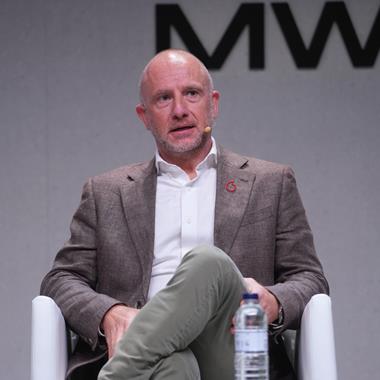
- CEO Gary Adey and CCO Chris Meads reflect on evolving the sector’s largest shared services organisation, with VOIS becoming an ‘active part of Vodafone Group strategy’.
- Equity partner Accenture has been pivotal in bridging commercial capability.
- The unit’s structural reorganisation allows VOIS to take on commercial risk, manage its own profit and loss, and offer flexible ‘as-a-Service’ propositions.
- MWC26 was used to talk up contract wins as evidence of the service provider moving from ‘order-takers to problem-solvers’.
- Pioneering Egyptian delivery centre, alongside hubs in India and Europe, provides high quality/value talent supporting operational prowess and driving VOIS into new MENA markets.
- Strategic partnerships with major technology players, including SAP, Microsoft, Google Cloud, and AWS, are fundamental to VOIS’s open ecosystem strategy.
- VOIS leadership is actively calling for an industry-wide shift away from siloed operations towards a highly collaborative, shared services model that drives efficient growth.
“We stopped playing defence in 2023”, says Gary Adey, Chief Executive of VOIS.
In the years since, Vodafone’s shared operations organisation has been reinventing itself as a groundbreaking, outward-looking commercial venture intended to change the direction of telco operations delivery not just for its parent company, but for the entire industry.
Speaking to TelcoTitans in 2025, one particular change was at the forefront of Adey’s mind. “I’ve got customers again”, he said with delight, “I’ve got telco customers, I’ve got B2B customers and we’re transforming a business”. At the time, VOIS (an acronym for Vodafone Intelligent Solutions) was at the start of this reinvention: the brand was launched; Accenture had made a €150m (£130m) investment to take a minority stake and enter into a strategic collaborative agreement; and the organisation was being built.
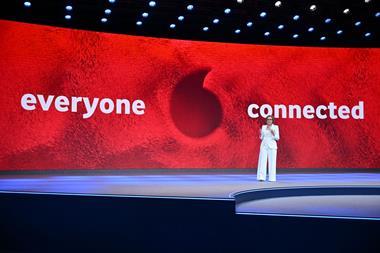
A year later, showcased at Mobile World Congress 2026, VOIS has a growing list of commercial wins — internal to Vodafone Group and external — that management considers proof of a successful shared services strategy.

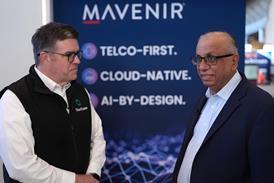
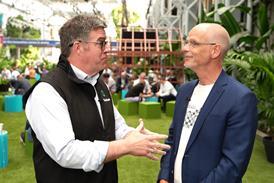
Speaking to TelcoTitans in Barcelona, Chief Commercial Officer Chris Meads said the biggest shift is in VOIS no longer being “captive”, now benefitting both from deep telco experience while also baking in expertise of outside partners (with Accenture a prime example).
This has seen the VOIS team transition from “order-takers” to “problem solvers”, with a set of specific propositions on offer and greater focus on identifying problems that can be solved through a combination of expertise found within VOIS and its partners.
“ When we turn up at our best, it’s a combination of our customer care business, of our technology business, in combination with Accenture and their AI expertise, for example. ”
Meads.
Meads offered up the “pretty big” recent deal with Centrica (to provide workplace management solutions in the UK) and agreements with internal operating companies where VOIS has “competed and won” within Vodafone Group as evidence of this approach in action.
Not new, but evolved
The transformation is considerable.
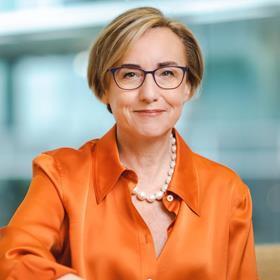
VOIS has, in one form or another, been part of Vodafone for approaching 20 years. Instigated by current Group CEO Margherita Della Valle when she was in the finance organisation, the original driver was taking back-office efficiencies developed within the financial operations area to the rest of the group.
From an initial customer operations focus, the shared services approach expanded to IT networks, Vodafone Business, and further back-office activities. With a workforce today of more than 30,000 people, compared to just 3,000 in 2011, one in three Vodafone employees now come under VOIS’s wing.
He joined the operation as CEO seven years ago, as it evolved from Vodafone Shared Services, and has since run with the idea of delivering more commercial, customer-facing propositions and leveraging the skills that he believes now make the rebranded VOIS not just “probably one of Vodafone’s biggest success stories, but one of its best kept secrets as well”.
“ The idea was to bring VOIS out of the shadows and really make it a more active part of the Group strategy, and really unlock all of that latent value that was being somewhat suppressed from being just a captive organisation. ”
Adey.
A history of delivering efficiency, with the scars to prove it
Prior to the decision to move beyond captive shared services, VOIS was performing well within Vodafone, according to Adey.
He highlighted that the unit had “not missed one” KPI since 2019, and, prior to the pandemic, had been growing at 15%–20% annually, with considerable success on rolling out automation and a strong culture. Nevertheless, Adey sees himself as “a change guy”, always convinced that things can be done better. “We could easily have sat on that and said, ‘well, this is great, let’s just do more of the same’, but there’s so much more potential”, he said.
The pandemic proved a stumbling block, and Adey recognises the impact of the pandemic on a human level, with 29 members of his team lost to COVID-19. “It was an awful time for us”, he said.
As the business emerged from this dark period, Adey recognised that a new approach would be needed to catch up for lost time on commercialisation, and partnering would be critical to this. This was not done instantly, but preparations got underway, ultimately leading to a search process from which Accenture came out on top. A vision for VOIS in 2030 was established, founded on commercialisation and encompassing digital transformation for service delivery and expansion of its global reach. Already, he said, “it’s a completely different business to the one I took on”.
The renewed VOIS portfolio is largely well established with internal clients, and is now being offered to Tier 2 and Tier 3 telcos as well as major enterprise on an ‘as-a-Service’ plug-and-play model. Adey detailed three essential elements that are powering this VOIS commercial proposition:
- Scale is one, where VOIS is claimed to be the largest captive services organisation in the world, outside of the financial services sector.
- Skills is another, and Adey highlighted the considerable depth in ability and experience at VOIS, and also the capacity to fill gaps to ensure an effective commercial proposition through the deep involvement of Accenture.
- The third thing, he said, “is you need to have the scars”, with VOIS’s background delivering BSS and OSS in a typical telco environment providing a deep level of understanding of sector-specific challenges that can lead to cost overruns and over-extended timelines.
“ We’ve done this in multiple markets, in multiple geographies. When you can talk through how we’ve done this stuff and what’s worked and what hasn’t worked — and how we’ve gone about fixing it — you get a credibility that you don’t necessarily get if you’re ‘just another BPO’. ”
Adey.
However, to get this commercial proposition in place, VOIS first needed to be able to think, and act, more like a commercial business.
The freedom to take (calculated) risks
Adey, Meads, and the wider VOIS team have set out to “tear up the existing rule book” when it comes to delivering shared services for telco and other enterprises.
The most significant change has involved restructuring the operation and securing the legal ability to take commercial risk, which is a fundamental difference from typical captive organisations.
This saw creation of a new entity that could manage its own profit and loss statement. With this in place, VOIS could start making decisions on pricing strategy, margin calls, and linking pricing to service quality and service level agreements.
Traditional use of standard intercompany transactions on a cost-plus basis was inefficient, for example, according to Adey. “If I messed up, there’s not really any skin in the game because my customers still have to pay my bills”, he said.
These changes required VOIS to revise and renew contracts with its internal Vodafone customers, with new master service agreements in place across Europe and Africa, including new service schedules and prices. “It’s been a monster effort”, Adey reflected, “but I couldn’t be more proud of what the team has achieved because, without those foundations, we can’t sell to an external customer, and we can’t do all the things that we would like to do to be commercially creative”.
In its early stages of reorientation, VOIS had channels to market through its internal teams, Accenture, and the Vodafone Partner Markets federation. Now, it is also targeting the enterprise market with support from €8bn-revenue Vodafone Business.
Meads said the Centrica deal, signed in collaboration with Vodafone Business, shows that there is “opportunity in the market to provide managed services combined with managed connectivity”.
Business-to-Telco (B2T) remains a work in progress, he said, “differentiated with our shared intelligence centre in Egypt”. Next up will be a look at the overlap between telecoms and utilities, where Meads considers there to be common problems and, for VOIS, existing intelligence in how they can be solved.
Opening up opportunity in MENA
The change in approach is opening up more Vodafone-linked markets to VOIS. Better able to navigate the travails of currency fluctuations and inflation in more volatile markets, it can now take on contracts across the growth markets in Africa, factoring trends into pricing decision to manage commercial risk on behalf of internal customers.
“ The new model for us opens up a whole continent. It opens up Vodacom South Africa, it opens up Mozambique and Democratic Republic of Congo, and everywhere we’ve not really been able to tackle before. It’s a big growth opportunity for the business moving forward. ”
Adey.
From its hub in Egypt, diversity in language has also opened new markets. “Even I’m surprised”, Meads said, citing a recent deal within Europe to provide Czech-speaking agents. A wealth of readily accessible talent means VOIS can take on MENA, too. “Egypt is our way in”, he said, with customer care capabilities and advertising sales taking the shared services organisation into markets Vodafone has rarely touched itself. “Egypt is the secret sauce”, according to Meads.
VOIS has ‘hubs’ in Cairo, as well as Budapest, Bucharest and Pune, to support a London HQ. It also has six ‘spokes’, spread across Europe, Egypt, and India, and a further seven ‘satellite’ offices in Europe.
Accenture helps mind the gaps
As the transformation plan for VOIS took shape, the team recognised that while the business had clear strengths in operational performance, there were capability gaps in commercial and sales, and scaling operational transformation at pace.
This led the business to the strategic alliance with $70bn (€60bn/£50bn) revenue Accenture, which has helped open VOIS up beyond its internal captive origins.
“ It’s something that blends that cost-consciousness and culture of the captive with that high-end capability and insight you only get from one of the world’s leading solutions and global professional services companies, and it’s important to get the balance and the mix right there.”
Adey.
Accenture has helped VOIS articulate its capabilities in a more professional way, and key members of the leadership team, including Meads and Carl Nicholson (Business Operations & Transformation), have been drawn from Accenture. “Chris and Carl bring unique capabilities in the market that now sit in VOIS, and that’s brilliant”, Adey enthused.
The significance of Accenture in making the venture work stretches beyond the €150m financial commitment. CEO Julie Sweet is a strong backer of the project, and continues to meet quarterly with her Vodafone counterpart Della Valle to keep VOIS moving in the right direction, said Meads. He considers this sponsorship to be highly valuable, noting that Della Valle was “personally” involved in the Accenture tie-up.
The partnership is mutually reinforcing. With awareness of VOIS somewhat limited outside of Vodafone, the reaction of potential customers can be “very different” to ‘VOIS and Accenture’ compared to ‘VOIS’ as a standalone, Adey said.
For Accenture, the relationship helps demonstrate the transformation capabilities it can bring to sector projects, including proving its approach is effective beyond internal deployments.
“ It’s nice to have a partner with skin in the game who clearly wants to get a return on that investment and drive growth as we do. It’s a nicer model than either ‘giving away control of your operations to an outsourcer’, or ‘paying them lots of money to do it on your behalf’. ”
Adey.
Speaking in 2025, Adey highlighted both Vodafone’ and Accenture’s commitment to AI, with Accenture’ $3bn investment in the evolving technology an asset that VOIS will be in a position to leverage. “Along with our internal assets and capabilities, it could be a real differentiator for us”, he said at the time. In early-2026, Meads updated to say that Accenture’s AI expertise is being tapped as a matter of course.
“ AI is now very much in everything we do. Bluntly, in BPI [Business Process Integration], if it’s not, you’re dead anyway. We’ve got to disrupt ourselves. ”
Meads.
Partner enthusiasm underlines changing mindset
VOIS also works with multiple major technology partners to support its intelligent solutions proposition.
SAP is a key strategic ally providing the RISE platform for back-office services, and linking with customer-facing services. Vodafone’s wide-ranging collaboration with Microsoft is also significant in areas such as IoT and AI, while ties with hyperscalers Google Cloud and AWS have been tagged as “super important” for the business by Adey.
ServiceNow is highlighted for its links with Vodafone Business, and collaboration is framed by Adey as another symbol of the changing approach to partnering within the Group.
“ It’s very much an open ecosystem. Maybe the Vodafone of 20 years ago had a belief that ‘we could do everything ourselves’, but that’s not the Vodafone of today, and you see this openness emerging with every new announcement. ”
Adey.
Putting the sharing in shared services
Adey noted an irony at the heart of traditional telco shared services: “we don’t actually share that much, and it drives me mad”.
The recent state of the industry, with “big buildings in the same place full of people doing the same things”, needs to change, he said. “I hate waste. I love efficiency, I love growth, I love creativity, and I care a bit about the planet as well”.
Adey’s ambition is to reinvent shared ops for telco and he is always on the lookout for likeminded leaders who also see a big transformative play for the industry to make on this front.
The entrenched approach is “ripe for reinvention”, he believes, while there is a risk that if operators continue to work independently, “tiptoeing around subscale proofs of concept with AI”, the sector will fail to unlock the value that can be extracted from modernising operations. Adey hopes to find others willing to take calculated risks and drive genuine change in the industry. “Rivalry is yesterday’s game”, he said at MWC26, “the future belongs to businesses that build connections, share, and move fast together”.
Adey’s enthusiasm for sharing services takes into account concerns that, in doing so, Vodafone may risk giving away an intellectual property edge or unique value, and he is confident that a balance can successfully be struck. For a sector that is “not super-buoyant”, sharing will enable all players to “do better collectively, and rise on the same tide”.
“ The industry needs a wake-up call: we can be smarter about this; you don’t have to hand over the family silver; and you don’t have to hand over anything super-strategic; but we can share a lot more. ”
Adey.
Topics
- Accenture
- Africa
- AI/GenAI/ML (artificial intelligence, agentic, machine learning)
- Automation
- AWS (Amazon Web Services)
- Chris Meads
- Digital transformation
- Enterprise (B2B)
- Europe
- Events
- Eventwatch
- Gary Adey
- Google Cloud
- Industry Voice
- IoT (Internet of Things, M2M)
- IT
- Margherita Della Valle
- Microsoft
- MWC (GSMA Mobile World Congress)
- Operations
- Partnerships & Alliances
- SAP
- ServiceNow
- Strategy & Change
- System integration (SI)
- TelcoTitans Industry Content
- Thought Leadership
- Transformation (change)
- Vendor Voice
- Vodacom
- Vodafone Business
- Vodafone Group
- Vodafone Intelligent Solutions (VOIS)