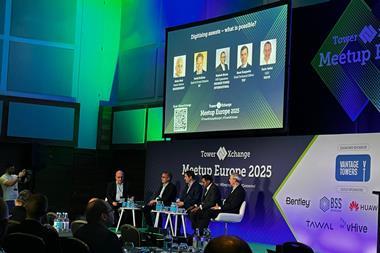



















- Panel of industry experts from towercos, SIs and solution providers position digitisation as the foundation of trust that is essential for AI and automation success for the telecoms industry.
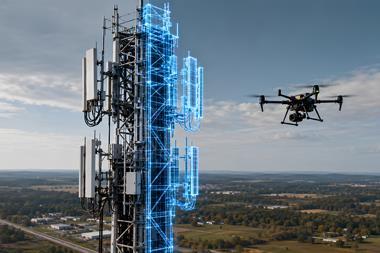
- Delivery of accurate data that links physical and digital worlds through digital twins is ensuring the ecosystem is no longer “flying blind”.
- Recent projects involving SBA and Vertical Bridge have seen thousands of tower sites acquired and managed on accelerated timeframes, also uncovering valuable additional ‘found revenue’.
- Digitisation specialist vHive warns sector players need to move ahead on projects or risk falling behind, with ‘if it ain’t broke…’ attitudes overlooking the advantages of speed in a world where “time kills deals”.
- While the gains of digitisation benefit the whole ecosystem, it also gives opportunity for individual domains to maximise their own transformation.
- Digitisation seen interweaving with AI to create a growth environment for telcos, and offering escape from the linear cost curve.
- Towercos said to be positioned as natural data brokers, with systems integrators the layer turning that data into operational value.
The telecoms infrastructure ecosystem is becoming more complex on multiple fronts.
Ownership, control, and maintenance of physical assets are increasingly split across entities with varying degrees of shared or independent ownership, even as networks themselves are virtualised and cloudification rolls on.
Digitisation across networks and systems is central to addressing this complexity, but it is not technology for its own sake. The greater collaboration it enables across the sector is itself a principal source of its value.
During a recent virtual industry webinar, Cracking the Code of Telecom Digitalization from Telecoms.com, Light Reading and vHive, senior figures from towercos, systems integration, and digitisation software made the case for cooperation. This, they argued, is essential if the intentions behind the reimagining of the telco ecosystem — greater operational efficiency, financial stability, and foundations for profitable revenue growth — are to be realised.
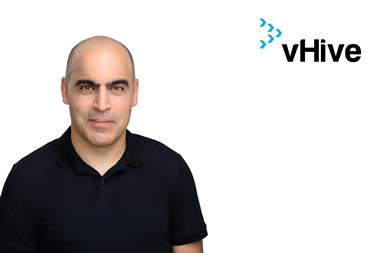
Success for this new order, the panellists agreed, will be built on automation and unlocking the capabilities of AI. This requires the physical and digital realms to come closer together. Yariv Geller, Chief Executive of digital‑twin software specialist vHive, highlighted technology that can cross the divide, effectively “digitising the handshake between different players across the ecosystem”.
“It’s really about connecting the physical world to the digital world, and that in turn enables AI, digital twins and automation to really make that connection possible and feed the rest of the value chain.”
Geller
Digitisation may create the opportunity for collaboration, but the trust to underpin it depends on foundations of accurate data.
Clear data to save the sector from flying blind

The value of accurate data was encapsulated by Paul Jesemann, CTO for Telco+ at Singtel-owned, Asia-Pacific technology services provider NCS.
“We’ve been flying blind”, he said, reflecting on the costs of poor visibility into field assets, including wasted site visits, unsuitable equipment deployed, or technicians sent on‑site without the right skills. Drone‑captured digital twins, he suggested, are now key to overcoming that.
“The value of data, of digitising what you have — your assets, your inventory — I can’t stress enough how important it is for planning purposes, for automation purposes, for everything we want to achieve around autonomous networks.”
Jesemann.
Better data is also a forerunner to better relationships.

Richard Cane, EVP and President, International at Americas‑and‑Africa towerco SBA Communications, described reconciling revenue records with mobile network operators (MNOs) as “a problem that every towerco has”.
SBA, he explained, seeks a data source that is, and remains, a true digital representation of the physical estate, environmental information included. That, he said, allows AI to correlate the reality in the field with what databases and contracts say should be there.
“We want to understand the value of our site to our tenants. We want to understand any issues with that site for our ground owners. By capturing all this information — basically relating the physical environment to the digital environment — it allows us to analyse and correlate many different data sets and derive value from that.”
Cane.
Accurate data must also be made actionable, Jesemann added, by integrating it across operators’ operations and business support systems stacks, and is the gateway to AI across the sector. “Democratising the data is essential for our success”, he said.
“To move to autonomous networks, which is a prerequisite for successful operation in the future, operators need exact and accurate data in order to apply AI to anything we do.”
Jesemann.
This journey, Cane added, “starts with these digital twins”. Engineers currently assess incoming data, but greater use of AI agents is on the horizon: “in fact, I’ve got a team of data scientists right now that are working on just that”.
Watch the full on-demand industry roundtable, featuring executives from SBA Communications, NCS, Vertical Bridge, and vHive discussing how AI, automation, and digital twins are reshaping telecom infrastructure operations.
Turning accuracy into speed, and taming a deal killer

vHive’s Geller flagged a stubborn obstacle: the ecosystem “is very siloed at the moment”, with data held across different players and often unsynchronised. “That leads to a lot of inefficiency”, he warned. Overcoming this is key to shortening build cycles and reacting more quickly. “That’s really what AI and automation and digitisation are pushing towards”.
“Whether it’s an MNO that wants to deploy new equipment, whether it’s a towerco that wants to accommodate that change on a tower, whether it’s the contractor in the field who’s building something and wants to make sure that the process is done efficiently, quickly, and approved — that entire flow is benefiting from digitisation.”
Geller.

Ariel Rubin, Vice‑President of Integration at Vertical Bridge (the largest private owner and operator of wireless infrastructure in the US), agreed that digitisation will effectively put projects on fast‑forward. “How we use data and how we share it with our clients is going to dictate a lot of how we operate and how quickly we can move forward with projects”. Digital twins, he said, are central.
“The time it would take to get our clients on air, or for us to approve an application, or for us to be able to identify any potential conflicts or issues shortens, which in essence increases our speed-to-market and our ability to start accelerating the revenue from that front… Something that we say a lot is that ‘time kills deals’. So shortening that timeframe gives us the ability to close on deals and have our carriers on air quicker.”
Rubin.
Keep moving forward, or fall behind
With many telecom workflows essentially unchanged for decades, Geller questioned the “if it ain’t broke, don’t fix it” instinct now risking the value AI and automation can deliver.
“What has worked in the past still works, but are you still competitive in your market if you’re not really using these newly-available technologies?”
Geller
SBA’s Cane agreed, stressing the importance of digital tools for towercos with tens of thousands of sites spread across countries and varied environments.
Geller also compared the rise of automation to that of cybersecurity: “very quickly it became not a nice‑to‑have, but something you can’t afford not to have”. Early adopters, he argued, will enjoy a structural advantage; falling behind becomes “almost a liability”.
“Either you adopt these technologies or you’re not competitive and you’re falling behind… The new paradigm is operational efficiency. That’s clear and [digitisation] enables it to happen.”
Geller.
SBA and Vertical Bridge: theory into practice
Cane highlighted how digital twins are making consolidation easier for SBA, emphasising the importance of maintaining a unified digital representation of the physical estate through its digitisation initiatives with vHive. During its $975m acquisition of around 7,000 Millicom towers across Guatemala, Honduras, Panama, El Salvador, and Nicaragua, the infraco completed due diligence “in a very short period of time…We flew over 6,000 of those sites in order to determine whether there are any issues”. It has since moved to verifying structural integrity and installed equipment, which “we would not have been able to do it without the support of vHive”. An additional upside, he added, has been the unearthing of “found revenue” when unbilled equipment is identified.
“We’ve found many instances where what the operators believe is installed… does not match what’s actually in our lease records.”
Cane.
Both towercos on the panel described work already done with vHive. Rubin reflected on Vertical Bridge’s late‑2024 agreement with Verizon to lease, operate, and manage more than 6,300 towers across all 50 US states, valued at roughly $3.3bn. Groundwork completed by the operator and vHive sped up identification of what was deployed on each tower, with the VP noting that “we were able to get through that by mid-2025… about six months into it, we were substantially complete”.
Replacing the manually‑compiled historic records would have been slower and less reliable; with digital twins, validation was faster and the need for contract amendments minimised. A second benefit emerged on the billing side, where Vertical Bridge could “almost seamlessly” understand what assets were available to third parties seeking colocation. “We knew exactly what space we had, not only on the tower but on the ground”, Rubin said. “we were able to minimise the time to get contracts in place with third-party carriers, and therefore begin billing a little bit quicker than we had historically”.
Collective gains, but leadership matters
The benefits of digitisation are felt across the board, but the panel also debated who is best placed to drive adoption.
Cane argued that towercos are trusted to safeguard commercial confidentiality when working with multiple operators on a single tower and so uniquely positioned. “The operators, while they may be co‑located, are still competing”, he said, “so I see the towerco as a natural broker, so to speak, to conduct these [drone] flights”. Towercos are also alert to the security of what is now critical infrastructure: “increasingly, security is becoming a big deal”.
NCS’s Jesemann saw a parallel role for systems integrators. It is “immaterial”, he argued, who collects the data; what matters is integrating it with the wider stack and putting it in business, operational, workforce, and planning context. He sees digitisation enabling better network quality and new monetisation paths, such as via network slicing, creating “a natural playing field” for SIs to “integrate [data] and maybe broker among the interests between mobile operators, towercos, and any other stakeholders in the field”.
Rubin agreed that, while different groups may push for digital tooling in different areas, the data must come from a common source. “Having a central partner that can support all of it — in this case vHive — is going to be key… We go to the site once and everybody benefits”.
Geller sees a first‑mover advantage on offer.
“There’s an opportunity for whoever leads the [digitisation] charge to be more competitive and to dictate the natural flow of things… [and to] set the tone in certain areas on how things should work in this brave new world.”
Geller.
Breaking the linear cost curve
In Geller’s view, digitisation answers a question preoccupying boards across the sector: how to break the linear cost curve.
Operators want to grow without growing opex. “AI automation is really serving that”, he said, and the journey, crucially, should not require fresh budget.
“The goal at the end of the day is to generate cost savings”, Geller said, “digitisation, AI: it should all fit into existing budgets”. Innovation, he stressed, must “[fit] the way that telcos work”, but do it better: “fewer truck rolls, fewer mistakes in the field, shortening the cycle, having fewer disputes between different players in the ecosystem”.
“It’s about improving on existing processes, not inventing something new and completely disrupting the business.”
Geller.
Greater efficiency, he and Rubin both stressed, need not mean lower headcount. “AI will certainly increase the volume of work we can do with our existing teams”, said Rubin, while Geller pointed to “tangible evidence from companies we’ve been working with — in terms of the ability to shorten cycles to reduce opex budgets year-over-year”.
“It’s about making people more efficient, so doing more with the same people. It’s not about creating new expenses, it’s just swapping an existing poor process sometimes with something new and better.”
Geller.
Topics
- AI/GenAI/ML (artificial intelligence, agentic, machine learning)
- Ariel Rubin
- Automation
- BSS/OSS
- Data
- Digital twin
- Digitalisation
- Drones
- Infrastructure
- Mergers and Acquisitions (M&A)
- Millicom International Cellular
- MNO
- Network & Infrastructure
- North America
- Operations
- Opex (operating expenditure)
- Paul Jesemann
- Revenue (income)
- Richard Cane
- SBA Communications
- Service assurance
- Singtel
- South America
- System integration (SI)
- Thought Leadership
- TowerCo
- Towers
- Verizon
- Vertical Bridge
- vHive
- Yariv Geller