











- ‘Keep it simple, and be useful’ is the core philosophy of Gianluca Landolina, CEO of the UK’s largest independent digital infraco, focusing on understanding customer needs before offering solutions, and viewing efficiency as a byproduct of simplification.
- Landolina sees consolidation of the MNO market, such as the Vodafone-Three merger, as an opportunity for stronger customer relationships and increased investment in the UK’s digitalisation.
- While Landolina acknowledges the efficiency of single networks, he advocates for a multi-actor infrastructure model to ensure the resilience and safety required for critical national infrastructure.
- Cellnex UK is preparing for future growth, including a potential larger role, with readiness to invest in the next phase of the UK’s digital evolution.
- Sustainability is positioned as a key driver of long-term profitability, and making Cellnex’s business model of sharing infrastructure assets inherently sustainable.
- Cellnex remains eager to invest further in the UK, with Group CEO Marco Patuano identifying the market as a prime target for capital allocation as the sector enters a new era of deployment.
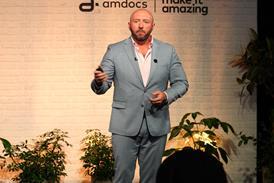
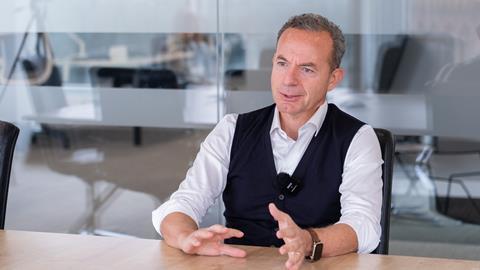
Gianluca Landolina, Country CEO of digital infraco Cellnex UK, is a leader who believes in the power of education.
Originally a civil engineer, Landolina moved into management with the completion of his MBA, which was followed by an Advanced Management Programme at Spain’s iconic IESE Business School.
“My engineering mindset helps me to be as analytical as possible, and my management training is used to help me to be as a little of an engineer as possible,” he quips.
This combination has led Landolina to deploy a clear philosophy as he now leads the UK’s largest independent infraco, and underpins his strategic view of the future for not only his business but also the wider sector and the nation’s path towards digitalisation.
Landolina has traversed multiple aspects of the telco sector, from engineering to financial management control, and real estate management. This culminated in his switch from the operator to infrastructure side of the industry in 2015, from where he went on to lead Cellnex Italia’s tripling of its tower estate to around 22,000 before taking the helm at its UK sibling in late-2023. Today, he oversees critical customer relationships with the UK’s three MNOs, stewarding a footprint of 14,000 active sites.
Speaking to TelcoTitans, Landolina shared how he has been undertaking a quiet stakeholder-centric revolution in the UK against a backdrop of wider Cellnex Telecom group recalibration.
This includes how greater emphasis on process is building a better business, why sustainability should be seen as a profit centre in a fast evolving wireless world, and how he believes fewer and stronger customers can be better in a consolidating MNO market.
The Landolina mantra: keep it simple, and be useful
When Landolina took on the UK CEO role he admits that “the local competitive dynamics of the industry were unknown to me”, but he quickly got on top of his brief, thanks to the team around him.
“Yes, I became an expert on the UK market, but not on my own but because of my team who helped me. Maybe we all reached a higher level of expertise through helping each other”, he mused.
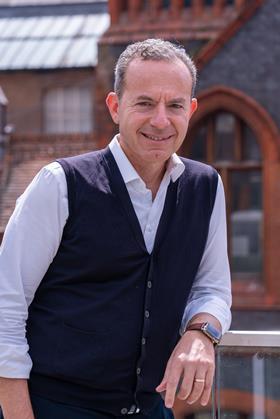
With this backing, Landolina hit the ground running. During his first year, Cellnex UK overhauled 159 different processes and procedures as he sharpened the focus on simplicity. This pursuit of improvement is continuing.
Again, he emphasises that this is not something that can just be done just at the CEO’s behest — “It’s impossible for one person: you need the entire organisation working towards that goal”.
The results were almost immediate, with customer operations taking a step up in Landolina’s first year. The business’s Net Promoter Score improved by 55 points, while levels of employee engagement also grew strongly to reach 81% (from 66%).
Greater efficiency was a contributor, but it was not something actively pursued by the CEO who takes a bigger picture approach to management and declares that “efficiency is a byproduct of simplification”..
“ To start looking for efficiency is usually the wrong approach for a company. Looking for simplification and eventually having efficiency as a by-product is something that I consider a much better approach, and a more sustainable approach for an organisation. ”
Landolina.
Landolina also emphasises that the primary focus for Cellnex UK is “to be useful”.
“ If you try to grow ‘whatever it takes’ independently from the needs surrounding you, you are going to crash into a wall. My biggest, strongest aspiration is to be useful for our customers. To understand the needs first before offering something. You need to understand the needs before you start talking. Listening comes first, and that is something we are trying to do as an organisation. ”
Landolina.
Developing a proactive understanding of customer needs
Landolina sees a clear opportunity to pursue his philosophy in development of the neutral host space, where “the horizon in front of us, particularly in the UK, is as broad as possible”.
“We are adding a lot of value to improve the quality of coverage”, he says, while sharing that he considers the government to have an “extremely good” understanding of what is required here and to be following the right path towards digitalisation. Expressing eagerness to work in partnership with the public sector to solve the challenges of quality coverage, Landolina is clear that Cellnex is also willing to be proactive with investment, having invested £6.1bn in the UK to date.
A key example is the infraco’s delivery of connectivity along the London to Brighton railway connection. The scale of investment has been significant here, with Cellnex deploying not just towers, but also distributed antenna system along the route, and fibre across all network elements.
“ Wherever there is a need for connectivity, Cellnex can make it possible. For coverage in a rural location, Cellnex is there. Or densification in an urban environment, Cellnex can enable it. If connectivity is needed indoors, Cellnex can be useful there too. In the case of the Brighton Main Line, we’re delivering infrastructure where it’s needed most along an integral stretch of railway that sees hundreds of thousands of travellers a day. ”
Landolina.
This is a clear example of fulfilling Landolina’s “be useful” mantra: “you need to help the traveller enjoy the travel — as simple as that”.
Projects such as the rail upgrade are important for supporting MNO relationships and are a way in which Cellnex is working to bolster its clients’ capabilities, and such activity also needs to deliver “a huge win” for the operators.
Ultimately, “it’s a matter of business”, he asserts: “MNOs have needs that we need to first detect, second fully understand, and then address. So, whenever we invest in advance, we do that because we have analysed the context, studied it in-depth, and understood that the need is real, is big, and we can satisfy it”.
Sustainability “a matter of profit” — and longevity
Change is a constant in the communication sector, and Landolina reflects on “the amazing disruptive journey” linked to technology over the past 30 years as he says, “you cannot rely on what you expect the context will be in the future, you need to be ready for change, and you need to enjoy the change”.
Considering the change over recent decades, Landolina is unwavering in his view that a long-term “industrial vision” of the future for Cellnex is critical to success. Considered through this far-reaching lens, the role of sustainability comes sharply into focus. “We need to pursue profit, we need to work for the sake of our shareholders, but we must do so in a sustainable way”, he stresses.
“ Cellnex is Europe’s largest telecommunications towers and infrastructure operator and, therefore, a company like Cellnex will be here for the next one hundred years and more. But to do that, we are focused on finding the proper balance of the three ‘P’s: the People we work with; the Profit we are pursuing for shareholders; and the Planet on which we operate. Such a balance is not the only driver, but it’s the most important. ”
Landolina.
This balance is also a dynamic one, requiring close attention and constant review. “Perfection does not exist. You cannot believe that any balance you think you’ve found today will be applicable next month. It won’t be”, he says.
“ Our business is sustainable because instead of having a tower mostly or solely utilised by one mobile operator, that tower is shared. Our business is to share as much as possible the same single asset. The more we share it, the bigger and more sustainable our business is. ”
Landolina.
Cellnex was ranked in the top-twenty of TIME Magazine’s list of the World’s Most Sustainable Companies of 2025, and is the highest ranking towerco. It has also been listed among the leaders on the Carbon Disclosure Project’s ‘A List’ of sustainable businesses for four consecutive years.
“ Sustainability is something that has significantly increased the level of appeal we may have for our customers, and for the rest of our stakeholders. To whoever believes that sustainability is a cost for the company, I would say sustainability in reality gives you back a lot of profit because it helps you by limiting your impact in the social and natural environment to really strengthen your work for the future. ”
Landolina.
MNO consolidation seen lifting investment, driving growth
In light of this pursuit of sustainable balance, and operating in a market adjusting to the VodafoneThree merger, Landolina says “the capability of being ready to react is the key driver of success”.
This leads him to see the combination of two major customers as an opportunity: “we’re going to have fewer customers, it’s true, but we are going to have stronger customers”.
Landolina considers that having more customers without the headroom and ability to invest does not benefit anyone in the ecosystem, or indeed the country. By contrast, a more concentrated and stabler customer base will open new opportunities — “you have a strong and solid way of growing again in the country, ensuring digitalisation is being approached properly”, he says.
Acknowledging that there may be challenges, as the infrastructure of Vodafone and Three is brought together and other changes ripple through the market, Landolina believes that “the more complicated the context, the easier it is to find opportunities”. He also returns to the importance of understanding the customer’s needs before acting, saying “I expect a much brighter and bigger growth than before the merger, not because I’m pursuing the growth, but because we understood that we needed to listen before talking”.
Cellnex has been charging ahead with its work supporting the VodafoneThree integration, in November flagging delivery of its first consolidated mast to the MNO, providing further 4G and 5G coverage to both Vodafone and Three network subscribers. Completion of the mast in Burnley is said to have come five months ahead of schedule, showcasing a full baseband modernisation to boost capacity and replace multiple radio units.
Cellnex will be getting stronger as well, he says, with its response to change a contributing factor.
“ You can lose points of presence, you can lose single tenants, but if you manage it properly, as we have, you couple that loss with parallel growth that may be even bigger, as it has been for us. ”
Landolina.
Landolina has spent time this year hosting MNO customers, BT/EE, Virgin Media O2 and VodafoneThree.
This included meeting VodafoneThree’s Chief Network Officer Andrea Donà in support of the substantial infrastructure investment commitments, with the Cellnex chief commenting that, “our neutral host solutions and macro infrastructures will contribute to supporting VodafoneThree’s gigantic project in our country, and we are proud to be playing our part”.
Cellnex playing the long game on market restructuring
With Landolina considering Cellnex to share goals with the UK’s MNOs and government, he aims for his business to be “an active driver, and a present actor, in the digitalisation of this country”, ready to work with any entity committed to the same goals.
In this light, he suggests that conversation on the optimal number of networks in a country must be ongoing, whether relating to core or access infrastructure.
Currently, Landolina sees consensus settled on “more or less two main radio access networks”, with four infrastructure operators today managing those networks, and “two being fully or partially captive”. “We are trying to match that need”, he explains, while also seeing a long-term opportunity to do more.
“ We are willing to grow further in this country as an infrastructure operator. The huge work that we did last year in terms of simplification and efficiency, and the huge work that we are continuing on the same project this year, is preparing for growth consistent with that approach. ”
Landolina.
Landolina reflects that while a single mobile network might offer the greatest efficiency, it falls short on safety and resilience that are key needs for critical national infrastructure, and he suggests that two networks could strike a better balance between efficiency and robustness. He adds that the players involved in managing this infrastructure would ideally be more than two, with multiple organisations delivering compatible elements across the architecture.
Although it’s uncertain whether the UK will head in this direction, Landolina is ready to play a role in enabling it.
“ Obviously we want to be ready for that future…. Does that need to happen today? No, but we are preparing now to ensure that when the market is ready, so are we. ”
Landolina.
Cellnex’s role is only likely to become greater, particularly if the MBNL infrastructure-sharing venture between BT and Three winds down within the next six years, which would on dissolution see Cellnex take direct control of thousands of current Three-controlled sites.
Cellnex: ready to take on a bigger role
Across the wider Cellnex group’s European business there is a strategy adjustment underway, reflecting the industry and financial context of the current market.
Cellnex, Landolina notes, “went through an amazing, incredible path of inorganic growth” that fitted the environment and opportunities of the time of its rapid development into European digital infrastructure leader, but “the context has changed”.
“ [Cellnex Telecom] understood we need to change as well. Now we are trying to consolidate that growth, consolidate our financial position, consolidate our industrial knowledge and capabilities — ready for the next phase. ”
Landolina.
This includes local considerations. When it comes to individual national operating companies like the UK, Landolina says that “the main brain is always local”, with autonomy on key activities.
There are areas where centralisation provides benefit for Cellnex, and across the group there are centres of excellence for different functions. On this front, the UK business is recognised as among the best for balancing efficiency and excellence, he notes, with its people credited for their flexibility and forward-thinking over the past two years of reorganisation.
CEOs of Cellnex’s major country markets, and its clusters of smaller markets, are part of the group executive committee, which Landolina says is “key for streamlining the flow of knowledge among ourselves”. This information sharing means that levels of knowledge about best practices and opportunities, as well as risks and problems, can be shared and kept high level. If an issue arises in one place, it is “spread immediately across all the countries in order for the rest to be ready”, he says.
The group can also get behind local initiatives, and Landolina says that Cellnex is ready to fund the UK to pursue opportunities that arrive as the market evolves and the investment environment develops.
“ Today in the UK, we are in the very first period of a new era. The massive, huge investments in terms of thousands of Build-to-Suit sites being deployed is not today. But are we ready to be an active participant when that phase starts here in the UK — and I believe it will start in the near-future? [Yes] And we are willing, all the way to group-level.
Our Group CEO Marco Patuano has already said a few times that the UK is a place where the group would like to further invest. ”Landolina.
Cellnex UK is a national operating business of Cellnex Telecom, Europe’s largest infraco, which operates across ten European markets with a portfolio of sites set to grow to more than 110,000 by 2030. Its other principal markets are France, Italy, Poland, and Spain. Cellnex UK provides towers, small cells, neutral host indoor and outdoor solutions, and other digital infrastructure services to the UK’s three mobile network operators as well as enterprise clients and venue owners or concessionaires in the healthcare, sport, retail, transport, public and other sectors.
Topics
- Andrea Donà
- BT Group
- Cellnex
- Deals (M&A)
- Digital transformation
- EE
- Financial & Performance
- France
- Gianluca Landolina
- Infrastructure
- Interview
- IoT (Internet of Things, M2M)
- Italy
- Marco Patuano
- Mergers and Acquisitions (M&A)
- Mobile Broadband Network Limited (MBNL)
- Network & Infrastructure
- Neutral host
- Poland
- Private Networks
- Spain
- Thought Leadership
- UK Infra
- United Kingdom (UK)
- Virgin Media O2 (VM O2)
- VodafoneThree