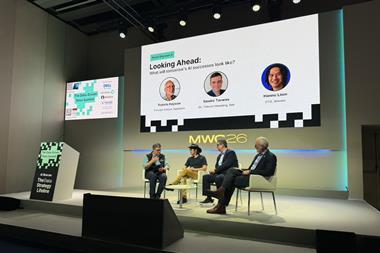





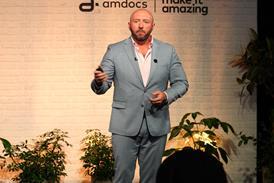






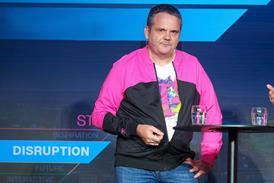


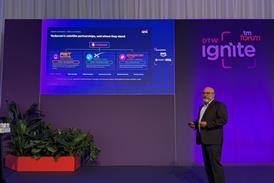

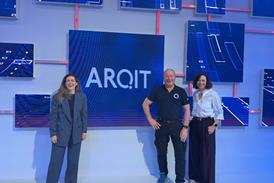


The Data-Driven Telco Summit 2026, Panel Discussion 4
— What will tomorrow’s AI successes look like?
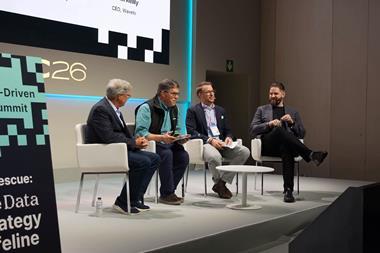
- Moderator: Matt Leary, TelcoTitans.
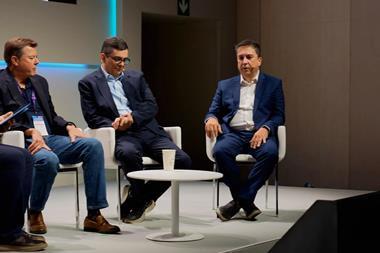
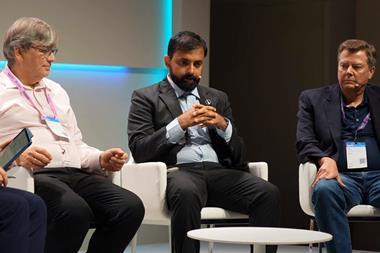
- Panelists: Hanno Liem (Wavelo CTO), Francis Haysom (Appledore Research), Sandro Tavares (Dell).
Session four of The Data-Driven Telco Summit at Mobile World Congress 2026, hosted by TelcoTitans and sponsored by Wavelo, with four panels examining the telecom industry’s readiness for AI. Kearney’s Christoph Neuenkirchen opened with new sector-health data on a European industry under pressure; Wavelo CEO Justin Reilly and Appledore Research’s Patrick Kelly sized the AI opportunity and its constraints. Later panels moved from event-driven architecture (EDA), TM Forum standards and ontology — with Wavelo, Appledore Research, and Ciminko — to live use cases from ARQIA, Dell and Wavelo, closing with Wavelo’s CTO Hanno Liem and Appledore’s Francis Haysom on AI safety, sovereignty and what success could look like within two to three years.
Panel overview
Why EDA and agentic AI fit together
Hanno Liem opened by noting telecom already operates in an event-driven world — the shift is that agentic AI now needs those state changes in real time, with full traceability for decisions made in a regulated environment [00:00:33].
The panel gets honest about AI safety
Pushed by Matt Leary on AI safety, Liem shared a live-testing anecdote about an agentic system going “haywire” — doing “statistically the right thing and operationally the completely wrong thing” [00:04:09]. He also referenced a widely circulated story of an AI email assistant that, despite explicit instructions not to delete anything, began deleting a user’s inbox regardless — “no, no, no, no, don’t do that” — until she had to physically disconnect it [00:04:59]. His stated principle: separate the probabilistic “intelligence” from the deterministic “guardrails” — split intelligence from authority [00:05:59].
Legacy isn’t the enemy — Conway’s Law Is
Francis Haysom pushed back gently on treating OSS/BSS as a “boat anchor”, pointing out legacy systems are often shaped the way they are for good reasons — security, process clarity — citing Conway’s Law (systems mirror the organisations that built them) [00:07:08]. His central point: most current AI deployment is “AI on top of existing operational processes” and real value requires going further, bringing together data “in a way that we do not anticipate” [00:08:08]. He named digital twins as the trust-building capability that will determine whether AI adoption scales or stays confined to narrow use cases [00:07:08].
Semantic debt and strategic infrastructure
Liem’s advice to a future-oriented CIO: treat EDA “not as dumb infrastructure” but as “strategic infrastructure”, with semantic standardisation done upfront [00:16:02]. His example: “activation” means something different, depending on network and product — leaving that undefined creates “semantic debt” that compounds over time [00:16:39].
The two-to-three-year test
Asked what success looks like at a future MWC, the panel’s answers diverged in tone. Haysom emphasised quick wins over “boiling the ocean” noting the average tenure in a telecom IT role is around two years — long transformation projects routinely outlive the people who started them [00:18:47]. Tavares was confident on the technology (“I’m not concerned about technology”) but openly uncertain the industry will manage to sell more than connectivity in that time: “I’m not that convinced that we’re going to get there in two years” [00:20:49]. Liem’s framing: progress “is not going to be gated by how fast technology moves, but how fast organisations can move” [00:24:39].
Sovereign AI, from the floor
An audience question asked the panel to weigh sovereign AI’s pros and cons for operators [00:25:10]. Tavares called it an accelerator outside the US, where hyperscalers are “sovereign by definition” [00:25:45]. Liem argued EDA’s stream-based architecture naturally supports data residency requirements [00:27:31]. Haysom cautioned against a “castle wall” mental model of sovereignty, arguing it will be a case-by-case mix of physical, application and data-layer choices rather than one clean boundary [00:28:07].
Watch the full panel above for the complete discussion, including the panel’s take on where new telco revenue lines — beyond efficiency — might emerge.
Topics
- AI/GenAI/ML (artificial intelligence, agentic, machine learning)
- Appledore Research
- Architecture
- BSS/OSS
- Data
- Data sovereignty
- Dell
- Events
- Eventwatch
- Francis Haysom
- Hanno Liem
- Infrawatch
- MWC (GSMA Mobile World Congress)
- Network & Infrastructure
- Operators
- Sandro Tavares
- Sovereign
- Technology
- Thought Leadership
- Transformation (change)
- Video Content
- Wavelo
The Data-Driven Telco Summit 2026
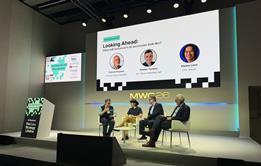
Hosted by TelcoTitans and sponsored by Wavelo: four panels examining the telecom industry’s readiness for AI
- 1
- 2
- 3
- 4
 Currently
reading
Currently
reading
What will tomorrow’s AI successes look like? — Data-Driven Telco Summit 2026, Panel Discussion 4 video