












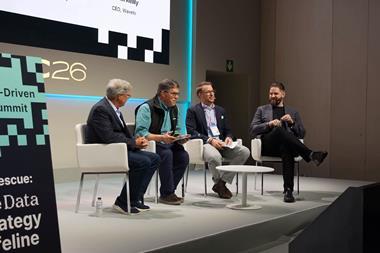
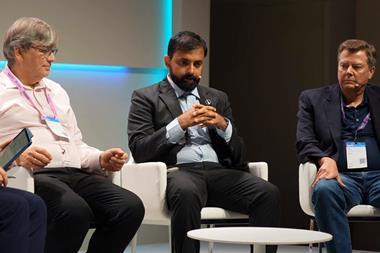
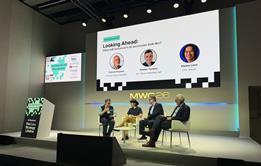
The Data-Driven Telco Summit 2026, Panel Discussion 3
— Real-time meets real world: Use case discussions
- Moderator: Matt Leary, TelcoTitans.
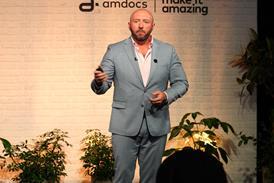
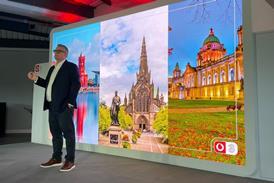
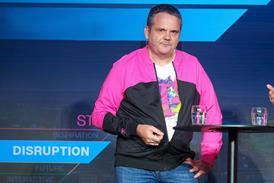
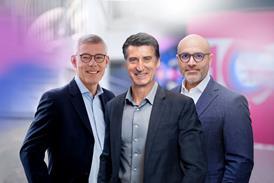
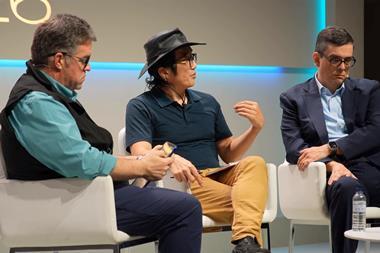
- Panelists: Eduardo Ázara (ARQIA), Bob Dietrich (Wavelo), Sandro Tavares (Dell).
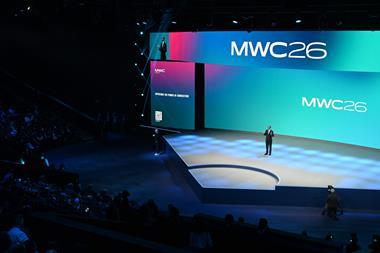
Session three of The Data-Driven Telco Summit at Mobile World Congress 2026, hosted by TelcoTitans and sponsored by Wavelo, with four panels examining the telecom industry’s readiness for AI. Kearney’s Christoph Neuenkirchen opened with new sector-health data on a European industry under pressure; Wavelo CEO Justin Reilly and Appledore Research’s Patrick Kelly sized the AI opportunity and its constraints. Later panels moved from event-driven architecture (EDA), TM Forum standards and ontology — with Wavelo, Appledore Research, and Ciminko — to live use cases from ARQIA, Dell and Wavelo, closing with Wavelo’s CTO Hanno Liem and Appledore’s Francis Haysom on AI safety, sovereignty and what success could look like within two to three years.
Panel overview
ARQIA: An MVNO built entirely on other people’s networks
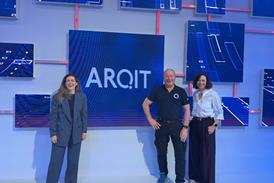
Eduardo Ázara introduced ARQIA as a full Brazilian MVNO carrying around four million IoT and M2M customers without owning any radio access network [00:02:06]. To navigate Brazil’s strict roaming rules, ARQIA uses a “profile donation” model — provisioning its own network access onto standard SIM cards rather than roaming in the traditional sense [00:03:02]. Founded in 1996 as a VoIP business, ARQIA moved into IoT/M2M in 2013 and was acquired by Wireless Logic in 2025 — bringing it into a group with close to 20 million IoT SIMs.
Ázara also demonstrated “Kiran”, a low-code IoT dashboard platform (shown live using ARQIA’s own office sensors) that can plug into any environment — hotels, cars, shopping centres, parking — with anonymised data made available for monetisation or AI-driven querying [00:05:01].
Wavelo’s drone fleet Catalyst
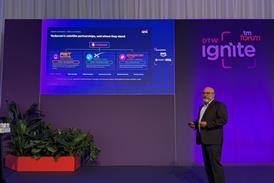
Bob Dietrich described a live TM Forum Catalyst project on “IoMT — the internet of moving things”: managing large fleets of security drones around international ports, with a sustainability angle around drone energy use [00:07:59]. The project has scaled through three phases — from a handful of drones to thousands — with Wavelo’s EDA layer handling service orders, 5G network slice orchestration for HD video, usage-based monetisation, and drone-failure assurance [00:09:56].
Dell’s traffic lights in Bellevue
Sandro Tavares described Dell’s Open Telecom Ecosystem Lab, where more than 80 companies — including Wavelo, Nokia and Ericsson — have been certified [00:12:09]. The standout example: working with AT&T and Chasm Labs in Bellevue, Washington, to process terabytes of daily traffic-camera data in real time, feeding an AI application that adjusts signal timing to prevent pedestrian accidents [00:13:32].
“Secrets of success”
Asked what actually accelerates these projects, the panel converged on a shared discipline: Dietrich on designing each data stream around what each specific consumer needs, so they “didn’t have to do the work” themselves [00:20:48]; Tavares on relentless pragmatism — “we’re not really in the business of running science fairs” [00:21:55]; Ázara on keeping scope simple and actually using the data collected, rather than just storing it “for someday” [00:23:32]. Ázara also cited a period of severe flooding in Brazil where sensor and cellular location data directly supported rescue efforts [00:18:00].
From the floor
TelcoTitans’ Alex Birkhead asked Dietrich whether the inventory and orchestration layer built for the drone Catalyst was a standard construct or something Wavelo-specific. Dietrich’s answer: Wavelo layers an orchestration and control level on top of the EDA and ontology to guarantee delivery across the event stream — not just publish-and-hope, but tracked, dashboarded delivery [00:27:14].
Watch the full panel above for the complete discussion, including the panel’s take on where new telco revenue lines — beyond efficiency — might emerge.
Topics
- AI/GenAI/ML (artificial intelligence, agentic, machine learning)
- Appledore Research
- Bob Dietrich
- BSS/OSS
- Dell
- Drones
- Eduardo Ázara
- Events
- Eventwatch
- Financial & Performance
- Infrawatch
- IoT (Internet of Things, M2M)
- MVNO (MVNE/MVNA)
- MWC (GSMA Mobile World Congress)
- Network & Infrastructure
- Operators
- Sandro Tavares
- Thought Leadership
- TM Forum (TMF)
- Video Content
- Wavelo
The Data-Driven Telco Summit 2026
Hosted by TelcoTitans and sponsored by Wavelo: four panels examining the telecom industry’s readiness for AI
- 1
- 2
- 3
 Currently
reading
Currently
reading
Real-time meets real world: Use case discussions — Data-Driven Telco Summit 2026, Panel Discussion 3 video
- 5